





FAQ: What is a Mobile Laminar Airflow Unit and its applications in cleanrooms?
Mobile Laminar Airflow Units are increasingly used in GMP environments to create localized clean zones. From the practical perspective of VCR cleanroom equipment, this article explains the working principle, applications, and how to select the right system.
- What is a Mobile Laminar Airflow Unit?
- How does this equipment work?
- What is laminar airflow?
- How is this different from a cleanroom?
- When should a Mobile Laminar Airflow Unit be used?
- Does this equipment meet GMP requirements?
- What is the role of the HEPA filter?
- What is the standard airflow velocity?
- Does this equipment require validation?
- Is HEPA leak testing required?
- Can this unit achieve Grade A conditions?
- Can it replace an isolator?
- Is regular maintenance required?
- What is the main advantage of this equipment?
- What are the limitations?
- Which industries use this equipment?
- Is operator training necessary?
- Does it consume a lot of energy?
- How to select the right unit?
- What is its role in GMP strategy?
The following content is compiled from practical implementation and technical knowledge, helping engineers, QA/QC teams, and facility managers better understand this equipment in GMP-controlled environments.
What is a Mobile Laminar Airflow Unit?
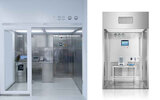
A Mobile Laminar Airflow Unit is a device that creates a localized clean air zone using unidirectional airflow through a HEPA filtration system. It is designed to be movable and flexible, commonly used in cleanroom environments to protect products from contamination. It serves as an intermediate solution between fixed cleanrooms and localized protection systems.
How does this equipment work?
The unit draws ambient air through a pre-filter, then passes it through a HEPA filter to remove particles. The filtered air is delivered as a unidirectional flow with stable velocity, creating a controlled clean zone below or in front of the unit. This airflow helps sweep particles away from the working area.
What is laminar airflow?
Laminar airflow refers to air moving in parallel layers without turbulence. In cleanroom environments, this type of airflow is more effective in controlling particles compared to turbulent flow. It is a fundamental principle for maintaining a clean working zone.
How is this different from a cleanroom?
A cleanroom controls the entire environment, while a Mobile Laminar Airflow Unit creates only a localized clean zone. It cannot replace a full cleanroom but can support critical operations within one.
When should a Mobile Laminar Airflow Unit be used?
It is suitable when a flexible clean zone is needed, when building a full cleanroom is not feasible, or when temporary upgrades are required. It is also useful in retrofit projects or small-scale production.
Does this equipment meet GMP requirements?
Yes, it can be used in GMP environments if it meets requirements for airflow, filtration, and validation. However, it typically supports localized Grade A conditions rather than replacing full GMP systems.
What is the role of the HEPA filter?
The HEPA filter is the most critical component, capable of removing ≥99.97% of particles at 0.3 µm. It determines the cleanliness level of the air delivered by the unit.
What is the standard airflow velocity?
The typical airflow velocity is around 0.45 m/s ±20%. This range ensures stable laminar flow and effective particle control.
Does this equipment require validation?
Yes. The unit must undergo FAT, IQ, OQ, and PQ to ensure proper performance and GMP compliance. This is a standard requirement in pharmaceutical environments.
Is HEPA leak testing required?
Yes. Leak testing ensures that the filter integrity is maintained. Any leakage would compromise the cleanliness of the system.
Can this unit achieve Grade A conditions?
Yes, but only locally. It is typically used to create Grade A zones within Grade B or C environments.
Can it replace an isolator?
No. An isolator provides a closed, highly controlled environment with a higher level of protection. A laminar airflow unit is an open system.
Is regular maintenance required?
Yes. Filters need periodic replacement, and fans and sensors must be checked regularly to maintain performance.
What is the main advantage of this equipment?
Its flexibility and lower cost compared to full cleanroom systems. It is easy to deploy and relocate as needed.
What are the limitations?
It only provides localized cleanliness and depends on the surrounding environment. Poor environmental control can reduce effectiveness.
Which industries use this equipment?
It is widely used in pharmaceuticals, cosmetics, food processing, electronics, and laboratories.
Is operator training necessary?
Yes. Operators must understand airflow behavior and proper procedures to avoid disrupting the laminar flow.
Does it consume a lot of energy?
Energy consumption is moderate, mainly from the fan and control system. It is generally lower than full cleanroom systems.
How to select the right unit?
Selection should consider application purpose, cleanliness level, working area size, and GMP requirements. Incorrect selection can affect product quality.
What is its role in GMP strategy?
It provides a flexible clean zone, reduces contamination risk, and optimizes investment costs. It is an important solution in modern manufacturing environments.
DAP