




Checklist for maintenance of all cleanroom equipment
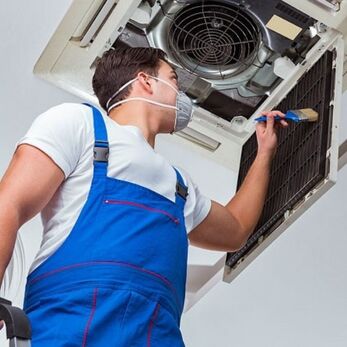
In a cleanroom environment, cleanroom equipment maintenance is crucial to maintaining cleanliness, stability, and ISO 14644-GMP compliance. Regular inspections help ensure proper equipment operation, prevent breakdowns, avoid cross-contamination, and reduce the risk of audit failures.
- 1. Why is regular maintenance of cleanroom equipment necessary?
- 2. List of equipment groups to maintain by cleanroom area
- 3. Detailed maintenance checklist for each type of cleanroom equipment
- 4. Recommended Maintenance Frequency by Equipment Type
- 5. Suggested Tools and Procedures for Cleanroom Equipment Inspection
- 6. Who Should Perform Maintenance and Record Results?
- 7. Common Questions About Cleanroom Equipment Maintenance
- 8. Need a Full Maintenance Checklist and SOP Template?
1. Why is regular maintenance of cleanroom equipment necessary?
In cleanroom environments-where every factor such as dust particles, microorganisms, pressure, and temperature must be tightly controlled-equipment is the backbone of the system. Ensuring that all equipment operates consistently is not just a technical requirement but also essential for maintaining compliance with international standards like ISO 14644, GMP EU/WHO, and HACCP. Regular cleanroom equipment maintenance checks help ensure proper equipment operation, prevent breakdowns, avoid cross-contamination, and reduce the risk of failed tests.
Primary goals of regular maintenance:
- Maintain equipment performance stability: Ensure devices like FFU, HEPA Box, and Pass Box operate at standard efficiency, preventing gradual performance decline.
- Prevent potential failures: Identify minor issues before they develop into major faults that could disrupt the entire production line.
- Ensure cleanroom environmental quality: Prevent exceeding allowed thresholds of dust particles, microbial load, or pressure differentials-which can compromise entire product batches.
- Meet audit and qualification requirements: Facilities in pharmaceuticals, food, and cosmetics must present clear maintenance records during GMP or ISO inspections.
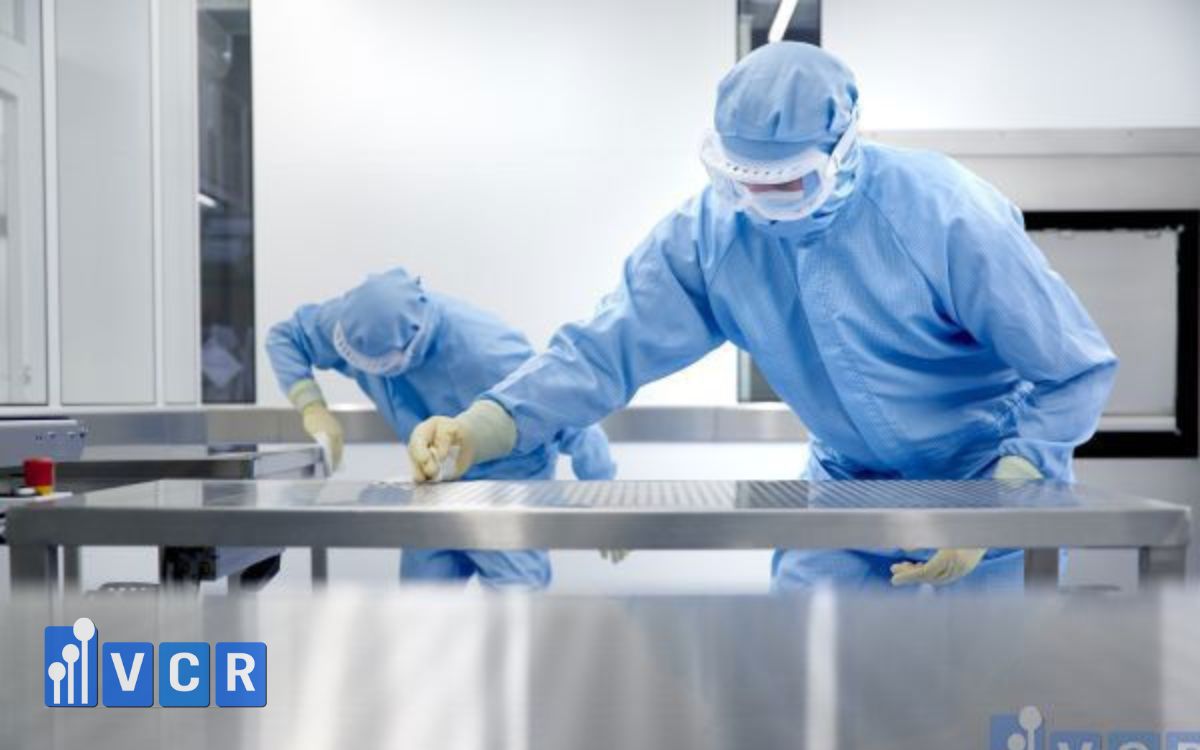
Risks of neglecting or improperly conducting maintenance:
- Cross-contamination: Contaminated filters, improper airflow, or faulty Pass Boxes may allow microorganisms or particles to move between zones.
- Unexpected equipment failure: FFU shutdown, interlock malfunction, or inaccurate pressure gauges can halt production lines.
- Loss of ISO/GMP certification: Failing periodic inspections could result in export restrictions or production suspension.
- Significantly higher recovery costs: Emergency repairs after breakdowns can cost 3-5 times more than scheduled maintenance.
2. List of equipment groups to maintain by cleanroom area
A cleanroom is not a single space but a system of functional zones, each with specific equipment requiring regular inspection and maintenance. The table below summarizes the key devices by area, based on common layouts in GMP and ISO 14644 cleanrooms:
|
Cleanroom Area |
Equipment to Maintain |
|
Airlock / Transfer zone |
- Pass Box: check seals, UV system, door mechanisms - Air Shower: check fan, nozzles, sensors - Interlock system: inspect controller circuit, relay, synchronization |
|
Weighing - Packaging Room |
- Differential Pressure Gauges: periodic calibration and accuracy checks - FFU (Fan Filter Unit): inspect motor and airflow - Lighting: check lux levels, clean dust from lamp covers |
|
HVAC - Air Handling Zone |
- HEPA Box: check pressure differential and seal integrity - Air Filters (Pre, HEPA, ULPA): replace periodically based on runtime - FFU: maintain per unit or as part of AHU system |
|
Gowning Area |
- Interlocks and magnetic locks: verify door logic to prevent simultaneous openings - Indicator lights and signs: ensure correct signals and safe visual cues |
|
Common System Components |
- Cleanroom doors (panel type): check for air leakage, deformation, and secure operation - Flooring (vinyl or epoxy): inspect seams, anti-slip surfaces, and cracks - Alarms and sensors: check sirens, lights, environmental detectors |
3. Detailed maintenance checklist for each type of cleanroom equipment
Below is a checklist outlining key items to inspect and service for commonly used cleanroom equipment. Performing these steps helps ensure consistent functionality and avoids deviations that could impact cleanroom standards.
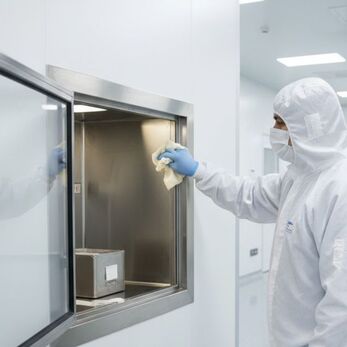
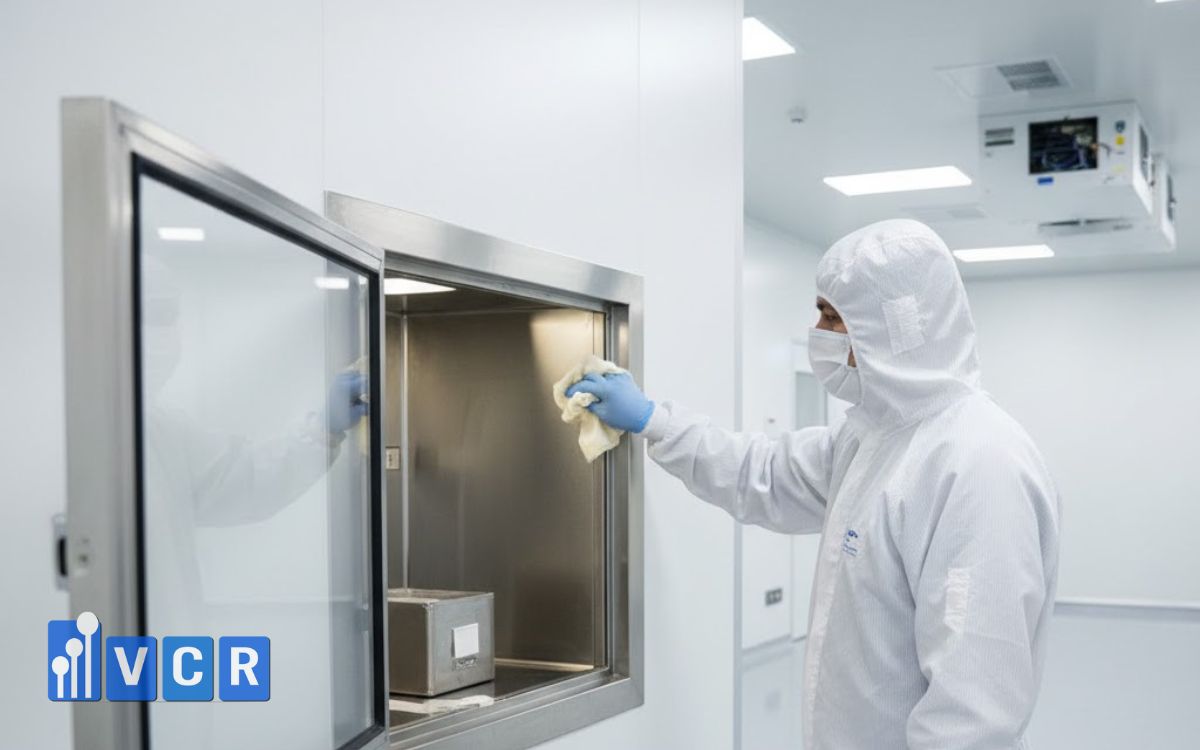
Pass Box
- Inspect door gaskets: elasticity, sealing, cracks or flattening
- Sanitize the internal chamber with alcohol or approved cleaning agents
- Test door sensors: responsiveness and synchronization
- If UV lamp is installed: verify operation and replacement interval
- Check door locking mechanisms: smooth open/close, no sticking
FFU - Fan Filter Unit
- Measure output airflow using an anemometer
- Inspect motor: noise level, vibration, power consumption
- Monitor pressure differential across the filter
- Clean FFU surfaces to prevent dust accumulation
- Log runtime hours to schedule filter replacement
HEPA Box
- Measure pressure drop across filter-high values may indicate clogging
- Check for seal integrity to avoid bypass leakage
- Replace HEPA/ULPA filters as recommended or after validation
- Inspect air duct connections: no leakage, secure sealing
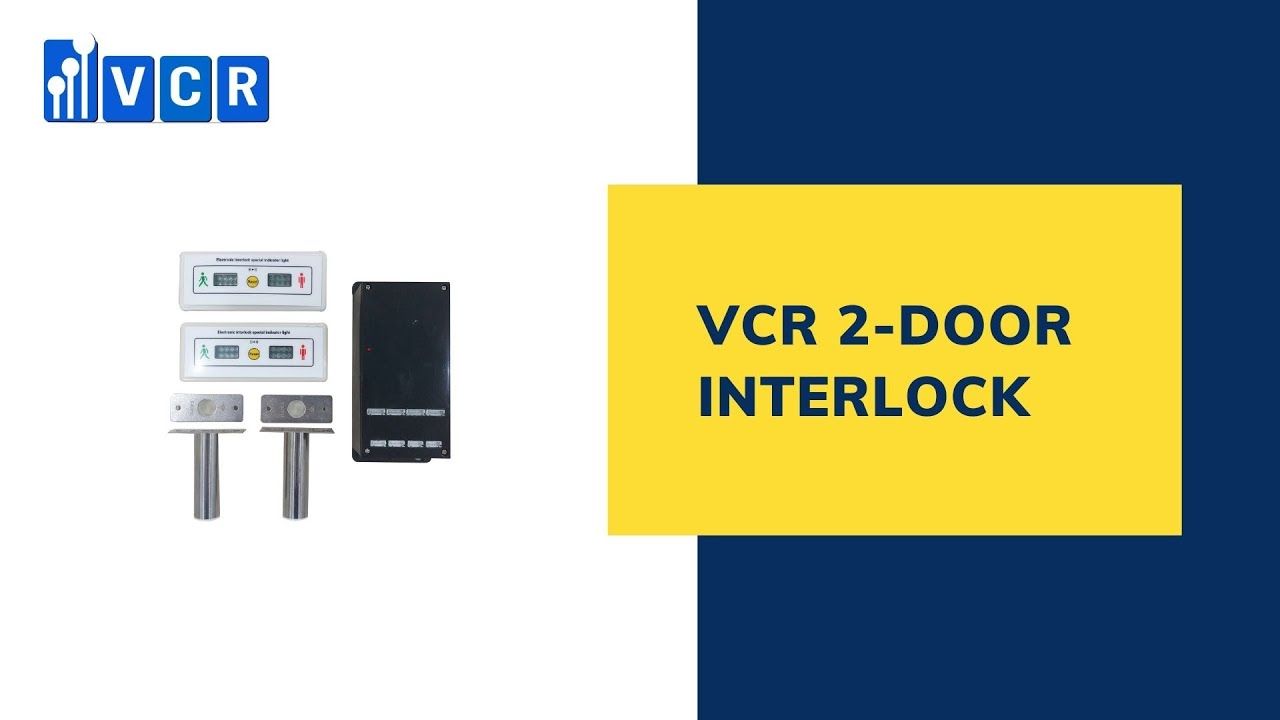
Interlock System
- Verify door logic: only one door should open at a time
- Test relays and timers for correct synchronization
- Clean and inspect control panels (especially for touch systems)
- Inspect magnetic locks: ensure strong hold and alignment
Cleanroom Lighting
- Measure illumination intensity (lux) by zone-typically >300 lux
- Check for dust or insects inside lighting enclosures
- Inspect silicone sealing for cracks or gaps
- Ensure LED lights function steadily, with no flickering
Differential Pressure Gauges
- Compare readings with a calibrated reference (calibration kit)
- Check pressure tubing: no kinks or leaks
- Log readings regularly for audit and trend analysis
- Perform calibration in a certified lab every 6-12 months
Cleanroom Doors / Panel Locks
- Ensure proper engagement between latch and lock mechanism
- Test spring tension and magnetic force (if magnetic lock)
- Lubricate and clean hinges to prevent rust
- Watch for door deformation due to pressure differentials-install bracing if needed
See more: Common mistakes when cleaning Pass Box
4. Recommended Maintenance Frequency by Equipment Type
To ensure cleanroom environments continuously meet GMP, ISO 14644, or industry-specific standards such as HACCP or ISO 22716, it is essential to establish a routine maintenance schedule. The table below outlines suggested inspection and replacement intervals for common equipment:
|
Equipment |
Inspection Frequency |
Replacement / Cleaning Frequency |
|
FFU (Fan Filter Unit) |
Monthly |
Air filter: every 6-12 months, depending on ISO class and dust load |
|
Pass Box |
Monthly |
UV lamp (if applicable): replace every 6 months |
|
HEPA Box |
Quarterly |
HEPA/ULPA filter: every 12-18 months or after validation |
|
Door Interlock System |
Twice a year |
Not fixed - replace when issues or malfunctions occur |
|
Differential Pressure Gauge |
Every 6 months |
Calibration: at least once per year |
Key Notes:
- Usage frequency significantly affects maintenance intervals: facilities operating 3 shifts per day should shorten the cycle compared to single-shift operations.
- Equipment involved in airflow and pressure control (FFU, HEPA, pressure gauges) should be maintained before peak production seasons or audits.
- Maintain runtime logs, especially for FFUs, to optimize filter replacement schedules and reduce unnecessary costs.
5. Suggested Tools and Procedures for Cleanroom Equipment Inspection
Cleanroom equipment maintenance must not be performed arbitrarily. Instead, it must follow standardized procedures, use the correct measurement tools, and document results in a traceable format. Below is a list of suggested tools and sample procedures based on ISO 14644 and GMP WHO/EU guidelines.
Essential Inspection Tools
|
Device |
Application |
|
Differential Pressure Gauge (Magnehelic/Digital) |
Measure pressure differences in airlocks, weighing rooms, HEPA Boxes |
|
Anemometer (Airflow Meter) |
Check airflow in FFUs and Pass Box fans |
|
Lux Meter |
Ensure cleanroom lighting meets intensity standards (>300 lux depending on area) |
|
Particle Counter |
Assess air cleanliness, especially after HEPA filter replacement |
|
UV Lamp Tester (if UV used) |
Verify UV lamp effectiveness and emission wavelength |
|
Calibration Kit |
Calibrate pressure gauges, temperature and humidity sensors |
Note: These devices should be calibrated periodically and certified for GMP/ISO compliance.
Sample Maintenance Procedure (SOP Format)
A cleanroom equipment SOP (Standard Operating Procedure) should include:
- Equipment name and ID
- Frequency of maintenance
- Responsible personnel
- Tools required
- Step-by-step procedure
Example for FFU:
Turn off power → open cover → inspect motor → measure airflow → record values → reassemble → test run - Pass/fail criteria
- Record sheet with signatures for accountability
VCR provides detailed SOP templates standardized to EU GMP. Contact us to request a free version tailored for pharmaceutical, food, cosmetic, or electronics facilities.
6. Who Should Perform Maintenance and Record Results?
Both the personnel responsible for maintenance and the method of documentation are critical factors during GMP, ISO 14644, or FDA audits. It's not only about doing the work but also about proving it was done properly-on time, with traceability.
Who Should Perform Maintenance?
|
Option |
Advantages |
Limitations / Considerations |
|
In-house Technicians |
- Familiar with equipment layout - Fast response to issues |
- Requires training on SOPs and standards - Needs a dedicated person/team |
|
Professional Service Providers |
- Have calibration tools - Guarantee GMP/ISO compliance |
- Higher cost - Dependent on external schedule |
Suggestion: Large facilities should use a hybrid approach-in-house for monthly tasks, and external service providers for periodic validation and calibration.
Proper Documentation for GMP/ISO Compliance
Maintenance records must be:
- Accurate
- Traceable
- Timely
Typical documents to maintain:
- Maintenance checklist by equipment ID
- Equipment operation logbook
- Calibration certificates
- Master maintenance schedule (monthly/quarterly/yearly)
- SOPs related to maintenance and validation
All records must include signatures, dates, responsible personnel, and verifiers.
Recommended Software for Maintenance Tracking
To avoid missed schedules or poor documentation, facilities can implement asset management or CMMS software. Popular options include:
- Fiix CMMS - Asset tracking, scheduling, spare part monitoring
- UpKeep - Mobile-friendly, ideal for field technicians
- Internal Excel + Google Calendar - Flexible for smaller facilities, quick setup
See more: How much does it cost to regularly maintain an air filtration system?
7. Common Questions About Cleanroom Equipment Maintenance
1. Do I need to maintain cleanroom equipment if it's not malfunctioning?
→ Yes. Cleanroom equipment must operate consistently to maintain environmental control. Regular maintenance helps detect potential failures early and prevents contamination or standard deviations.
2. Who is responsible for equipment maintenance-the investor or the operator?
→ It depends on the EPC or operational contract. However, under GMP regulations, the operating party is ultimately responsible for ensuring equipment performance.
3. Is there software for maintenance scheduling?
→ Yes. Options include:
- CMMS platforms like Fiix, UpKeep
- Excel templates with Google Calendar/email reminders
- VCR’s customized templates designed for cleanroom equipment layouts
4. How is maintenance different from calibration?
→ These are two distinct processes:
- Maintenance involves checking, cleaning, and replacing worn-out components on a regular basis.
- Calibration refers to adjusting measurement instruments to ensure accurate readings within specified tolerances. Required for gauges, sensors, and metering devices.
8. Need a Full Maintenance Checklist and SOP Template?
Cleanroom equipment maintenance is not only a technical necessity-it is also essential for meeting GMP and ISO 14644 standards and passing rigorous audits.
Don't let minor oversights create major compliance risks.
VCR has standardized a comprehensive maintenance package, including:
- Equipment-specific maintenance checklists
- GMP/WHO-compliant SOP templates
- Excel-based scheduling tools with automatic reminders
Register to receive it for free or contact a VCR technical specialist for support.
Hotline: 090.123.9008
Email: [email protected]
Website: https://vietnamcleanroom.com/
Diep VCR