




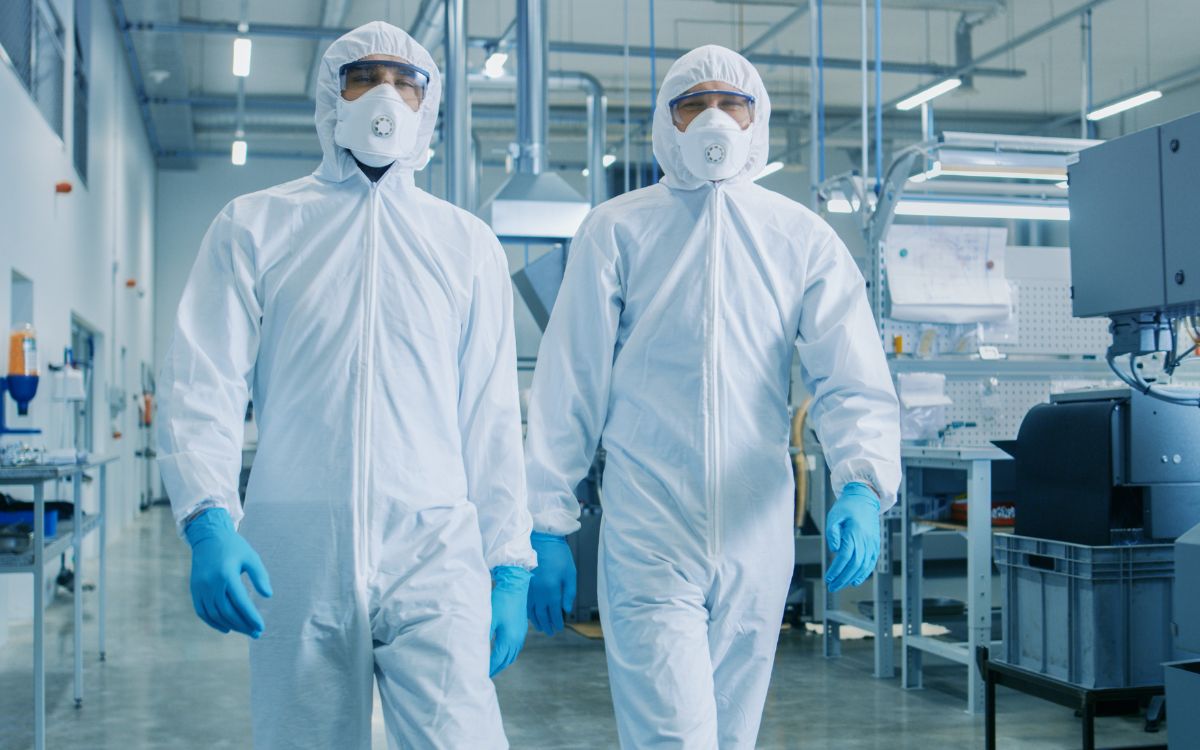
20 frequently asked questions when designing GMP cleanrooms
In the pharmaceutical industry, getting a cleanroom GMP design right from the start determines operational efficiency and the likelihood of achieving certification. Errors such as incorrect flow arrangements, inappropriate material selection, or lack of differential pressure control can delay a project or cause it to fail an audit.
In the pharmaceutical industry, a cleanroom is not just a production space - it is the "heart" of the entire quality assurance system. Designing it correctly from the beginning, in compliance with GMP (Good Manufacturing Practice) standards, not only helps businesses obtain certification quickly but also avoids costly operational errors.
Common mistakes such as incorrect personnel/material flow, improper material selection, or lack of pressure control systems can delay projects, cause audit failures, or even require complete redesigns.
Therefore, understanding the key questions when designing a GMP-compliant cleanroom is an essential preparation step - ensuring stable operation and compliance from the very first inspection. This article compiles the 20 most frequently asked questions, along with concise and clear explanations - suitable for engineers, QA/QC personnel, and investors planning to implement a GMP cleanroom.
Group 1: Standards & Classification
1. What is GMP? How is a GMP cleanroom different from a regular cleanroom?
GMP (Good Manufacturing Practice) is a mandatory set of principles in pharmaceutical production to ensure product safety, consistency, and quality. A GMP cleanroom does not just control dust, microbes, and pressure like a standard cleanroom - it also adheres to strict guidelines on personnel/material/airflow design, surface finishes, operation procedures, and validation.
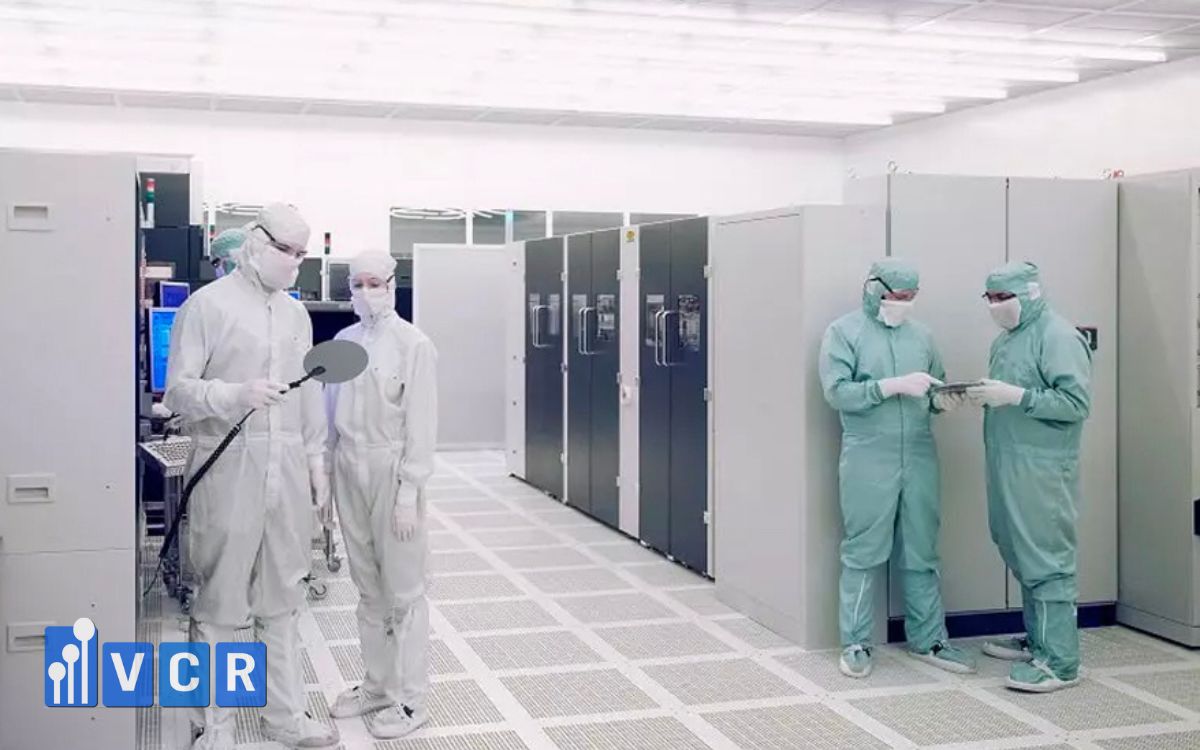
In summary: Regular cleanrooms may meet ISO standards, but GMP cleanrooms are legally required in pharmaceuticals and are subject to regulatory oversight.
2. What’s the difference between EU-GMP and WHO-GMP?
Both EU-GMP and WHO-GMP are based on good manufacturing practices, but they differ in cleanroom classification, inspection requirements, and documentation structure:
|
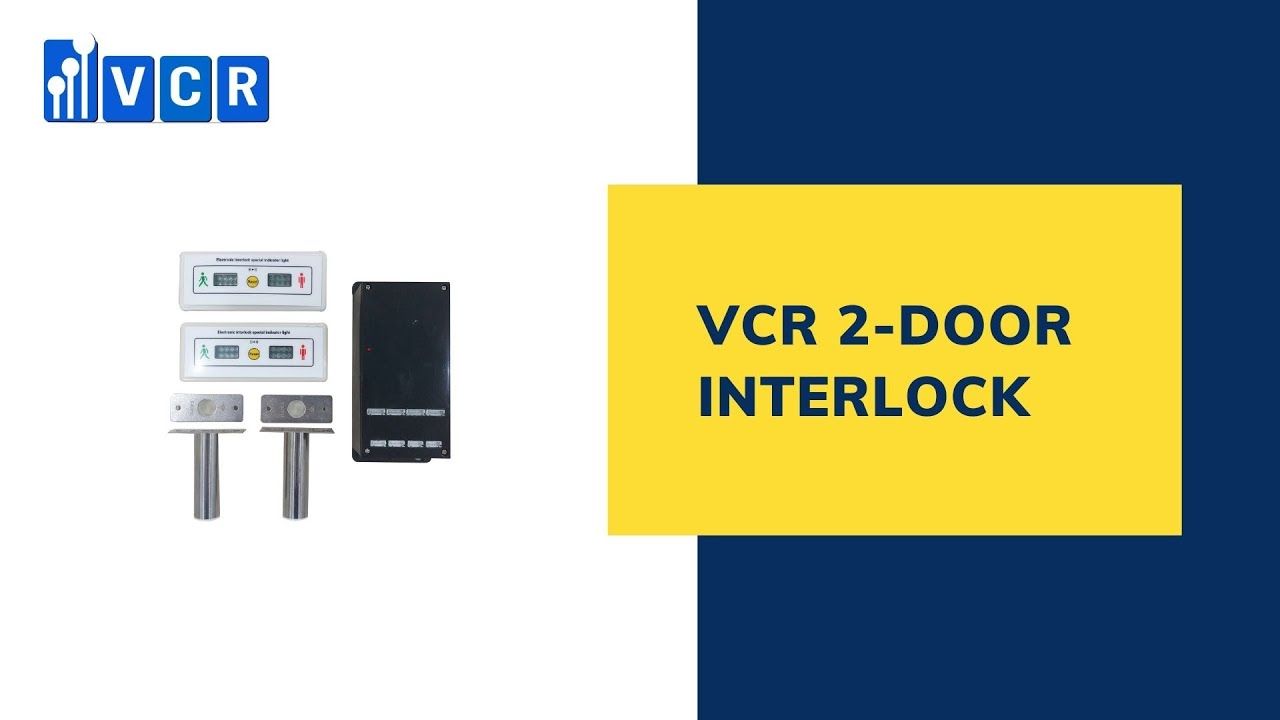
Criteria |
WHO-GMP |
EU-GMP |
|
Commonly used in |
Vietnam, developing countries |
Europe and international trade |
|
Cleanroom grades |
Not clearly defined (uses ISO) |
A, B, C, D |
|
Documentation |
Simple, flexible |
Strict and standardized |
|
Inspection demand |
Moderate |
Rigorous, regular audits |
Tip: If your plant is targeting exports to Europe, design according to EU-GMP.
3. How are cleanroom grades classified under GMP?
GMP (especially EU-GMP) classifies cleanroom environments based on the microbiological contamination risk during manufacturing:
|
Grade |
Typical Application |
Control Level |
|
A |
Sterile zones (filling, capping) |
Very stringent |
|
B |
Surrounding grade A areas |
Stringent |
|
C |
Compounding, primary packaging |
Moderate |
|
D |
Material preparation, sampling |
Basic |
Additionally, ISO 14644 classifies cleanrooms by particle concentration (Class 1 to 9), often used as a technical reference for GMP zones.
4. Should cleanroom design follow ISO 14644 or GMP?
In practice, both standards are necessary:
- GMP is the regulatory framework - defining required layout, operations, and validation procedures.
- ISO 14644 is the technical standard - used for verifying cleanliness levels, setting performance benchmarks, and conducting tests.
Thus, a GMP cleanroom must:
- Follow GMP to pass regulatory inspections
- Apply ISO 14644 for technical validation
Group 2: Layout & Spatial Design
5. How many compartments should a gowning room have: 1-way, 2-way, or 3-way?
The number of compartments depends on contamination control requirements and cleanroom grade:
|
Configuration |
Common Use |
Movement Direction |
Control Level |
|
1-way |
Small plants, Grade D |
One-directional |
Basic |
|
2-way |
Grade C, B facilities |
Two separated doors |
Moderate |
|
3-way |
Sterile/aseptic areas (e.g. filling) |
Separate clean, buffer, dirty zones |
Very stringent |
For EU-GMP, most pharmaceutical plants use 3-way gowning for sterile areas and 2-way for general production zones.
6. How should weighing rooms be arranged to avoid cross-contamination?
Weighing rooms are high-risk zones. Best practices include:
- Separate them from storage and packaging areas
- Maintain negative pressure relative to adjacent rooms
- Use local exhaust, enclosed weighing stations, or isolators
Additionally, consider using dedicated pass boxes for materials, separate from personnel routes.
7. How should personnel and material flows be separated?
GMP requires full separation of personnel and material flows to prevent contamination:
- Personnel flow: through gowning, air shower, then into production
- Material flow: through pass boxes or material airlocks, avoiding contact with personnel routes
If shared access is unavoidable, apply time-based separation or disinfection protocols.
8. Is an airlock mandatory?
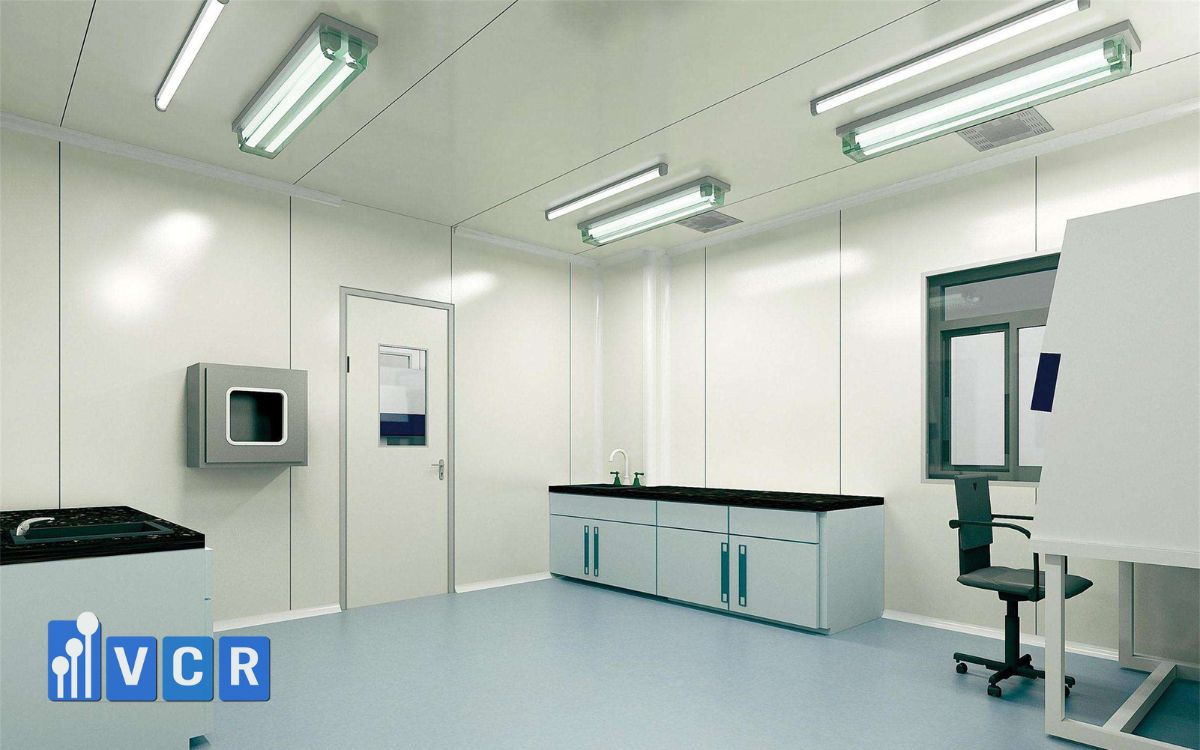
Yes. Airlocks are mandatory in GMP cleanroom design to stabilize pressure and control access between zones.
Types of airlocks:
- Personnel airlock: between gowning and clean area
- Material airlock: between pass box and clean production area
- Static or dynamic: with or without HVAC integration
Airlocks should include interlocked doors to prevent simultaneous opening and ensure pressure integrity.
Group 3: Essential Equipment
9. What are the minimum equipment requirements for a GMP cleanroom?
Depending on scale and cleanliness level, typical equipment includes:
- Air filtration: FFU, HEPA box, pre-filters
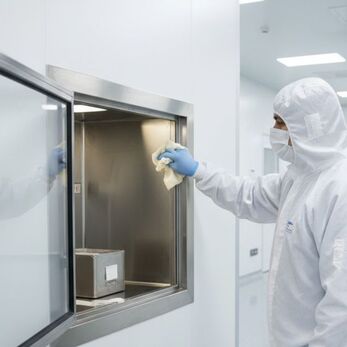
- Pass box: for transferring materials without opening doors
- Air shower: for personnel dust removal
- Interlock doors: pressure retention and access control
- Differential pressure gauges
- Cleanroom LED lights: flush-mounted, easy to clean
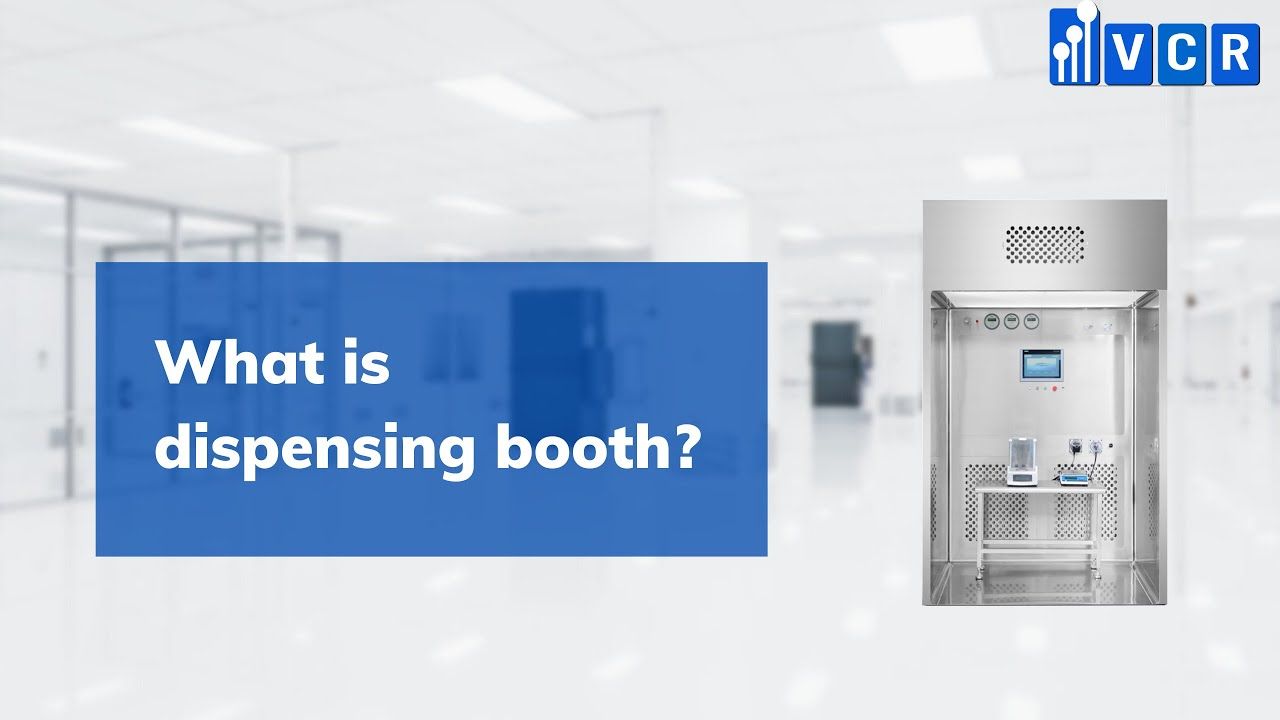
- Workstations, weighing booths, fume hoods
Some processes may require biosafety cabinets, sample storage, or sterilizers.
10. FFU or HEPA Box - which is better for ISO 7?
|
Criteria |
FFU (Fan Filter Unit) |
HEPA Box |
|
Fan |
Built-in |
Relies on central HVAC |
|
Airflow |
Strong, self-regulated |
Dependent on system airflow |
|
Stability |
High |
Variable |
|
Cost |
Higher |
Lower |
|
Best for |
ISO 5-6 or with fresh air |
ISO 7-8, stable environments |
Conclusion: For ISO 7, HEPA Box is more cost-effective unless high airflow control or fresh air is required - then FFU is preferred.
11. Which type of pass box is suitable for pharmaceuticals?
Recommended types for GMP cleanrooms:
- Basic pass box: for Grade D or admin zones
- Electronic interlock pass box: for Grades C-B, secure door control
- UV + HEPA pass box: for sensitive or contaminable materials
- Dynamic pass box: with HEPA and positive pressure, often used at material entry points
Tip: Choose stainless steel (304) or powder-coated pass boxes with easy-to-clean corners, pressure gauges, and warning lights.
12. Is an interlock system necessary?
Yes. Interlocks are mandatory for GMP cleanrooms, especially at:
- Personnel and material airlocks
- Entrances to areas with different cleanliness grades
Benefits:
- Prevent simultaneous door opening - maintain pressure
- Enforce unidirectional movement
- Minimize contamination risk
Two main types:
- Mechanical interlock (rarely used)
- Electronic interlock (with indicators, logging, remote control)
Group 4: Materials & Finishing
13. What materials are recommended for walls, ceilings, and floors?
In GMP cleanrooms, all surfaces must be easy to clean, non-dusting, non-absorbent, and chemically resistant. The following materials are commonly recommended:
|
Area |
Recommended Materials |
Notes |
|
Walls |
PU or EPS insulated panels with powder-coated steel or stainless steel |
Avoid gypsum or regular cement walls |
|
Ceiling |
Cleanroom panel ceiling or anti-corrosion aluminum ceiling |
Should allow easy access for HVAC maintenance |
|
Floor |
Antibacterial epoxy, anti-static vinyl |
Seamless, coved at wall junctions, anti-slip |
All surfaces should be rounded at corners and have minimal joints to reduce dust accumulation and facilitate cleaning.
14. What type of doors should be used in GMP cleanrooms?
Doors are a critical point for pressure loss and cross-contamination. GMP-compliant doors should be:
- Panel doors: same material as cleanroom panels, high airtightness
- Cleanroom aluminum-glass doors: good visibility, with EPDM gaskets
- Stainless steel doors: for high-hygiene areas like filling or compounding rooms
Recommended features:
- 3-side gaskets + bottom seal
- Self-closing hinges
- Compatible with interlock systems
Avoid using wooden doors, residential-grade aluminum doors, or any doors with gaps.
15. Are cleanroom lights required to be dustproof?
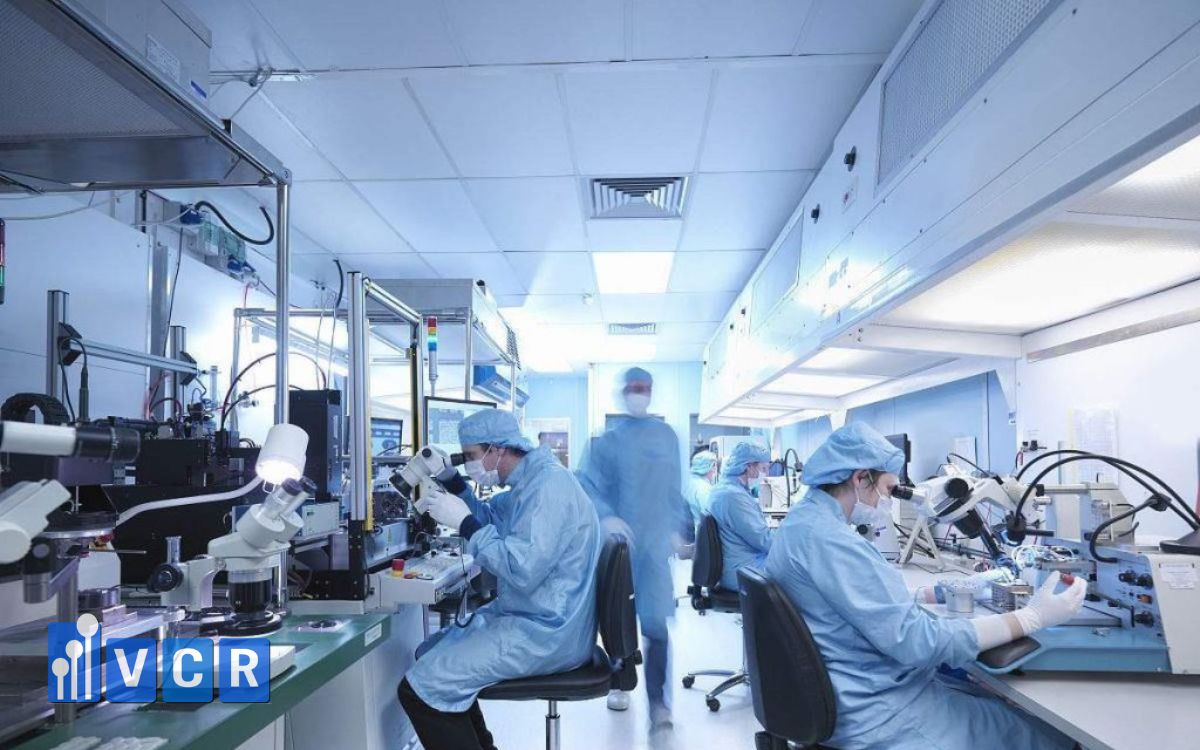
Yes. According to GMP and ISO 14644, lighting fixtures must be dustproof, non-turbulent, and easy to clean. Suitable types include:
- Sealed LED panel lights: flush-mounted, flat glass surface
- Tube lights with sealed mica covers: often used in support areas
Requirements:
- IP65 or higher
- Antibacterial coating (if needed)
- No flickering or glare, to ensure safe and accurate operations
Group 5: Operation & Monitoring
16. How to ensure correct pressure differentials between rooms?
Pressure differentials are essential for preventing contamination flow from dirtier to cleaner areas. EU-GMP recommends maintaining 10-15 Pa between adjacent rooms.
To ensure stability:
- Design proper air flow: from clean → less clean zones
- Use interlocked doors: prevent simultaneous opening
- Install differential pressure gauges in each area
- Regularly maintain filters and fans to avoid pressure drops
Some facilities also use BMS systems for real-time monitoring and alarms.
17. What must be validated before cleanroom operation begins?
Before commissioning a GMP cleanroom, it must undergo validation according to ISO 14644 and GMP guidelines.
Key validation items:
- Particle count: determine ISO class
- Pressure differential checks: between rooms and airlocks
- Air velocity and volume tests
- HEPA filter leakage test
- Lighting, noise, temperature, and humidity checks
- Recovery time test (clean-up efficiency)
All results should be documented in IQ - OQ - PQ protocols for GMP compliance.
18. What are the HVAC system requirements for GMP cleanrooms?
HVAC systems in GMP facilities control temperature, humidity, pressure, and cleanliness.
Key requirements:
- Maintain 20-25°C and 45-60% RH (depending on the product)
- Separate AHUs for different cleanroom grades to prevent cross-contamination
- Terminal HEPA filters required for Grade C and above
- Integrated monitoring and data logging systems
HVAC systems with online supervision and easy audit traceability are highly recommended.
Group 6: Cost & Implementation
19. What factors affect GMP cleanroom construction cost?
There is no fixed cost, as it depends on several technical and operational factors:
- Cleanroom grade
- ISO 7-8 costs less than ISO 5-6
- Higher grades require stricter equipment and airflow controls
- Area and site layout
- Larger or more complex layouts increase material and labor costs
- Irregular layouts may cause inefficiencies and material wastage
- Finishing materials and equipment
- PU panels, vinyl flooring, stainless steel doors vary in price
- FFUs, interlocks, automatic pass boxes can significantly impact cost
- GMP validation and documentation
- Some contractors charge extra for document preparation and staff training
Estimated range:
GMP ISO 8 cleanrooms in pharmaceutical manufacturing typically cost 8-15 million VND/m², depending on requirements.
20. How long does it take to design and build a GMP cleanroom?
Project timelines vary based on scale and complexity. Typical durations:
|
Phase |
Average Duration |
|
Survey & consultation |
3-5 days |
|
Basic & detailed design |
1-2 weeks |
|
Material fabrication |
2-3 weeks |
|
On-site installation |
3-6 weeks |
|
Validation & commissioning |
1-2 weeks |
Total timeline: approximately 6-10 weeks for a mid-sized project.
Larger facilities (over 300 m²) may take up to 3 months if integrated with central HVAC, electrical, and utility systems.
Need GMP Cleanroom Design Support?
Are you planning to build a pharmaceutical, cosmetics, or food factory to GMP standards?
Don’t let design mistakes delay your project or cause audit failure.
The VCR engineering team is ready to support you - from consultation and design to equipment supply and GMP validation.
- Industry-specific technical consulting
- Full documentation: IQ - OQ - PQ
- 100+ GMP projects successfully delivered
Contact us today to receive a FREE concept layout and quote:
Hotline: 090.123.9008
Email: [email protected]
Website: https://vietnamcleanroom.com/
Diep VCR