




What Do GMP Inspectors Usually Focus on in Cleanrooms?
During a GMP inspection, cleanrooms receive close attention because they directly affect contamination control, product quality and patient safety. Inspectors do not only verify the cleanliness classification; they also assess facility design, pressure differentials, airflow, environmental monitoring, cleaning, qualification and the consistency of operational records.
- Why Are Cleanrooms Always a Major Focus During GMP Inspections?
- Contamination Control Strategy and Cleanroom Design Suitability
- Personnel, Material and Waste Flows and Door Interlocking Systems
- HVAC, Pressure Differentials and Cleanroom Airflow
- Airborne Particles, Microbiology and Environmental Monitoring
- Unidirectional Airflow, Smoke Studies and HEPA Filter Integrity
- Cleaning, Disinfection and Personnel Practices
- Maintenance, Calibration, Qualification and Change Control
- Deviations, Alarms and Data Integrity
- Common Deficiencies and Preparation Before a GMP Inspection
- Equipment Supplier Support, Frequently Asked Questions and Conclusion
- Conclusion and Contact for Cleanroom Equipment Support
Why Are Cleanrooms Always a Major Focus During GMP Inspections?
Cleanrooms directly affect the control of particulate contamination, microbial contamination and cross-contamination in pharmaceutical manufacturing facilities. For sterile products, any weakness in cleanroom design, operation or monitoring may increase the risk of contamination that cannot be fully detected through finished-product testing alone.
For this reason, GMP inspectors usually spend considerable time examining cleanrooms, air-handling systems, personnel and material flows, environmental conditions and supporting records. However, the objective is not merely to confirm that a room meets Grade A, Grade B, Grade C, Grade D or a specific ISO 14644 cleanliness class.
More importantly, the manufacturer must demonstrate that the cleanroom remains in a state of control throughout routine operation. This state must be supported by appropriate design, stable equipment performance, clear operating procedures, competent personnel, reliable monitoring data and an effective deviation-management system.
A cleanroom may pass particle classification during qualification but still be considered inadequately controlled if it frequently experiences pressure alarms, poorly sealed doors, incorrect personnel movement or deteriorating microbiological trends.
Inspectors normally apply a quality risk management approach. Areas involving exposed products, aseptic processing, highly potent substances, microbiologically sensitive materials or significant cross-contamination risks are usually examined more closely.
An inspector may begin with a high-level document and then select one alarm, deviation or production batch for detailed traceability. For example, a pressure differential alarm may lead to a review of the measuring instrument, calibration history, building management system data, alarm-response procedure, product-impact assessment and corrective action.
The main question is not how many procedures the facility has written. Inspectors want to know whether those procedures actually control the identified risks.
A detailed procedure that does not reflect the real facility design, is poorly understood by personnel or is not consistently followed does not provide convincing evidence of GMP compliance.
Contamination Control Strategy and Cleanroom Design Suitability
The Contamination Control Strategy is a central element of the modern approach to sterile manufacturing. It should not be treated as a summary document prepared shortly before an inspection. Instead, it should connect all contamination-control measures throughout the facility.
The strategy should explain how the manufacturer identifies and controls contamination sources related to personnel, raw materials, equipment, facilities, air, water, process gases, cleaning, maintenance and production activities.
For cleanrooms, it should provide the rationale for cleanliness classification, room zoning, pressure cascades, environmental-monitoring locations, monitoring frequencies and alert limits. It should also describe how individual control measures work together to create multiple layers of protection.
At an exposed sterile-product location, protection cannot depend only on a high-efficiency particulate air filter. It also depends on unidirectional airflow, equipment design, operator technique, the distance between the filter and the critical operation, material disinfection and environmental monitoring.
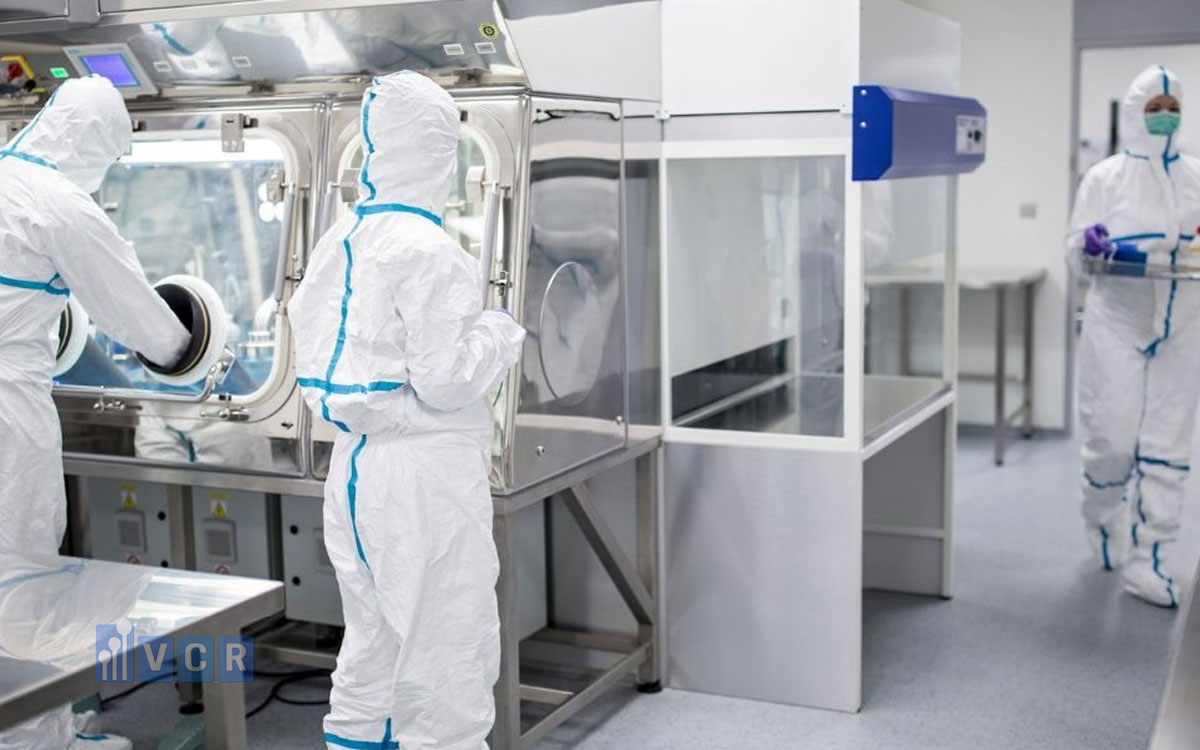
Inspectors may compare the Contamination Control Strategy with cleanroom drawings, qualification reports, monitoring data and actual deviations. If the strategy states that a risk is adequately controlled but routine records show repeated alarms or recurring contamination, inspectors may challenge the scientific basis of that conclusion.
Cleanroom design and functional zoning are also examined closely. Inspectors assess whether the assigned cleanliness grade is appropriate for the risk of each manufacturing step. Not every area requires the highest cleanroom classification. However, the selected classification must be scientifically justified and suitable for the condition of the product.
Read more: 5 factors to consider during cleanroom design stage
Inspectors may review facility layouts, zoning drawings, pressure-cascade diagrams and personnel and material flow maps, then compare those documents with actual conditions.
A common issue is a difference between approved drawings and the operating facility. During routine use, manufacturers may relocate equipment, change workbench positions, add cabinets, install new doors or change the intended use of a room. If these changes are not formally assessed, they may alter airflow patterns and increase contamination risk.
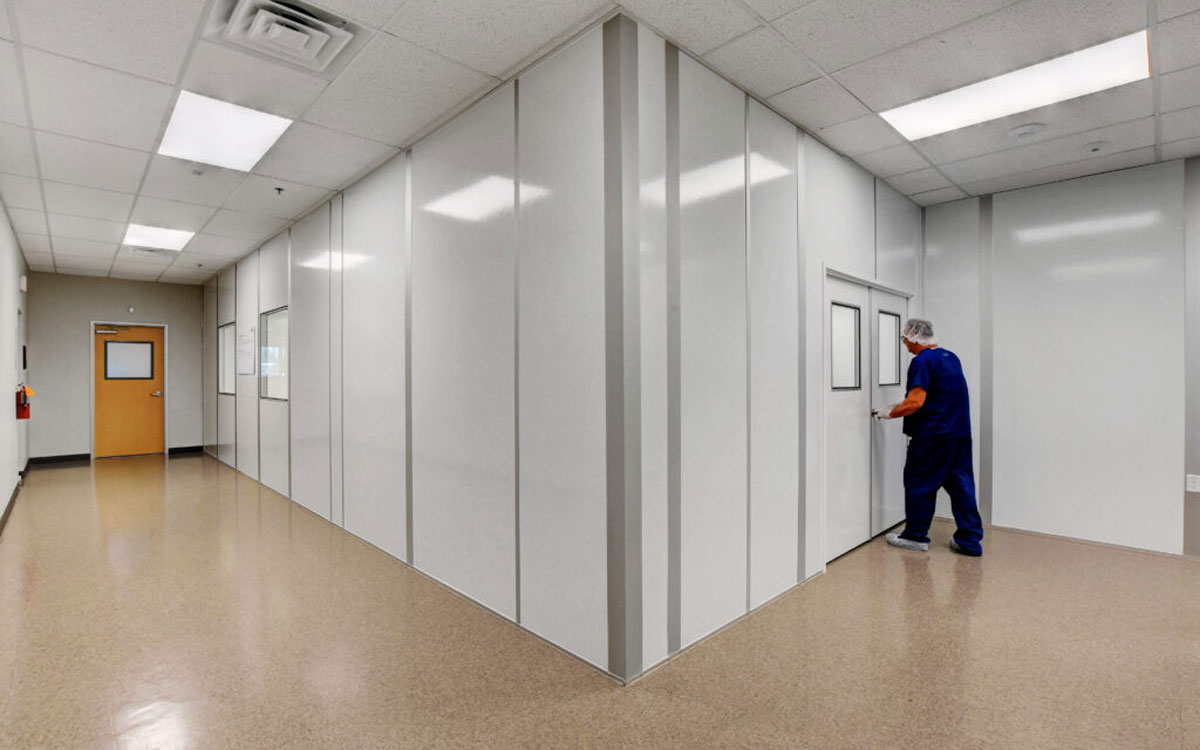
Cleanroom surfaces must support effective cleaning. Walls, ceilings, floors, doors and joints should be smooth, sealed, non-shedding and resistant to cleaning chemicals. Cracks, damaged sealant, deteriorated flooring or unsealed service penetrations may become locations where residues and microorganisms accumulate.
Inspectors may also examine the space between equipment and walls, access for cleaning and the presence of inaccessible areas. Equipment installed close to a wall but not fully sealed may create a hidden area that cannot be properly cleaned or inspected.
For sterile manufacturing lines, the design should reduce direct human intervention as far as reasonably practicable. Restricted Access Barrier Systems and isolators may reduce contamination risk, but they must also be appropriately designed, qualified and operated.
Personnel, Material and Waste Flows and Door Interlocking Systems
Flow patterns often reveal differences between documented procedures and actual operations.
A facility drawing may show a clearly defined one-way flow, while personnel may take shortcuts, use the wrong doors or transfer materials in the opposite direction during routine work.
Inspectors may directly observe how personnel enter the clean area, perform gowning, transfer raw materials, move intermediate products between rooms and remove waste.
Flows that require assessment include personnel, raw materials, products, clean tools, dirty tools, packaging materials and waste.
In some facilities, it may not be possible to create completely separate routes for every flow. In such cases, the manufacturer must use time-based separation, intermediate cleaning or appropriate transfer equipment.
A pass box is commonly used to transfer materials between two areas without opening a personnel door. However, it supports contamination control only when correctly selected and operated. The interlocking system should prevent both doors from being opened simultaneously, internal surfaces should be easy to clean, and procedures should clearly define the material-cleaning steps.
For a dynamic pass box, the fan and high-efficiency particulate air filter must be tested, maintained and qualified. Installing a dynamic pass box does not automatically make every transferred material clean. Its effectiveness also depends on material arrangement, cleaning-cycle duration, load conditions and surface-disinfection procedures.
Inspectors may ask operators where materials enter, where they are cleaned, how long they remain in the pass box and how treated materials are distinguished from untreated materials.
Airlocks also help maintain room classification and pressure cascades while personnel or materials move between areas.
Their performance depends on design, door-open time, door sealing and user behaviour.
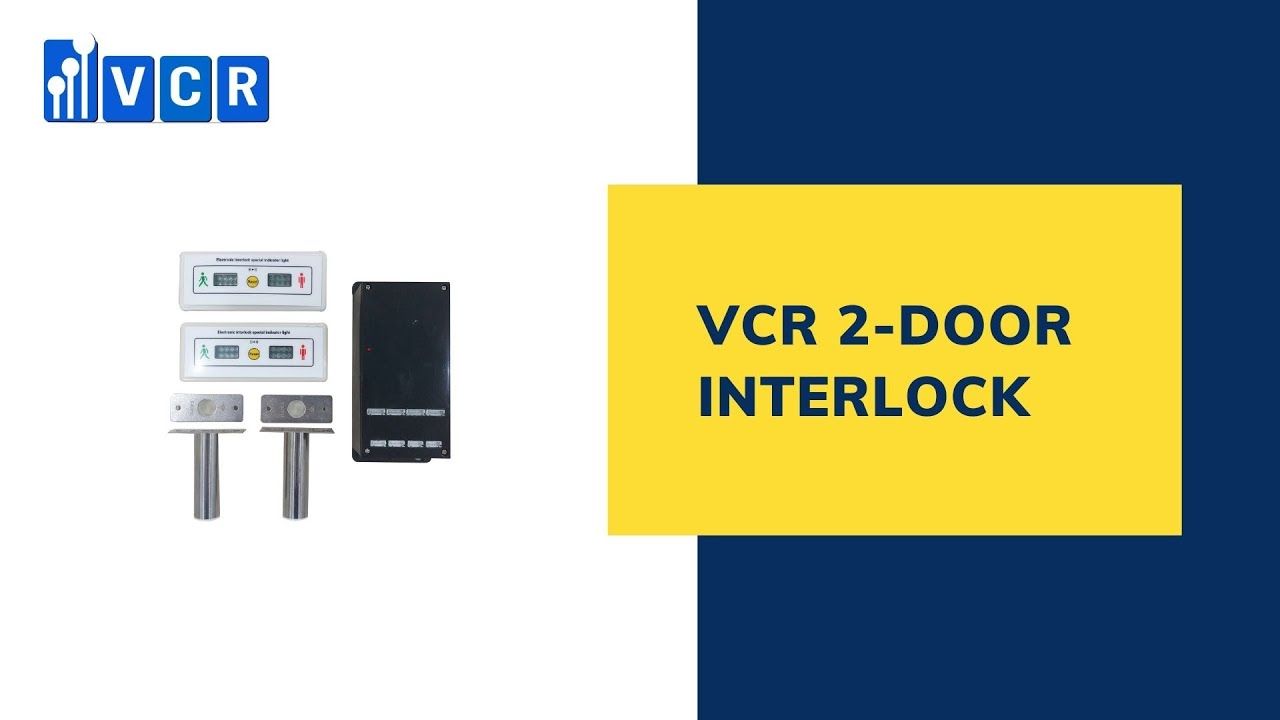
Interlocking systems are used to prevent both doors from being opened at the same time. When one door is open, the other should remain locked, except in predefined emergency situations. Inspectors may test the interlocking function directly or ask operators how they respond to a system failure.
A system that is routinely bypassed because it creates operational inconvenience indicates an unsuitable design or weak procedural control.
Cleanroom doors should close automatically, align correctly and maintain suitable sealing. Hinges, door closers, gaskets and locking mechanisms should be included in preventive-maintenance programs. Door-open alarms should also have appropriate delay settings. If alarms occur constantly during normal operation, personnel may begin ignoring them. If the delay is excessive, genuine loss of control may not be detected promptly.
HVAC, Pressure Differentials and Cleanroom Airflow
The heating, ventilation and air-conditioning system is the technical foundation of a cleanroom. It controls supply-air volume, filtration, temperature, humidity, air-change rate and room pressure.
During an inspection, the HVAC system is not assessed only through design drawings or original parameters. Inspectors also examine its actual operating performance. They may review supply-air volume, supply-grille positions, return-air locations and overall airflow distribution.
Read more: HVAC System Design for Multi-Product Manufacturing Facilities
A room may have a high air-change rate but still contain stagnant zones, recirculation areas or locations where contaminants are not effectively removed if supply and return points are poorly arranged.
Air-change rate should not be treated as an isolated value that automatically proves cleanroom suitability. The required value depends on heat load, occupancy, equipment, particle generation, recovery requirements and airflow-distribution efficiency.
Inspectors may assess how the HVAC system responds when doors open, the number of personnel increases, production equipment operates or filter resistance rises. These conditions may alter airflow volume and pressure compared with an empty-room condition.
Reduced airflow or HVAC shutdown outside production hours may also be examined.
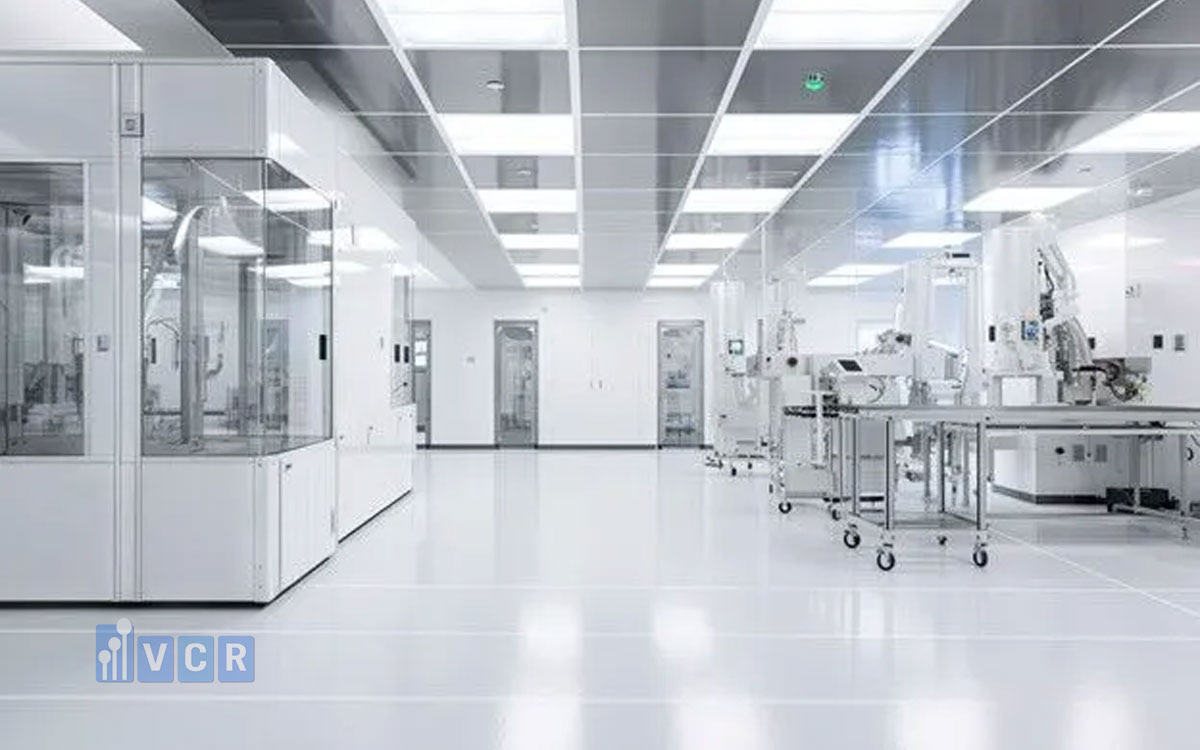
If the manufacturer lowers fan speed to save energy, a documented risk assessment and supporting data should demonstrate that the cleanroom can recover to an acceptable condition before production begins.
Inspectors may also review power failure, fan failure and sensor-failure scenarios. The manufacturer should define which activities must stop, which products may be affected and what conditions must be restored before operations resume.
Pressure differentials between rooms are used to control airflow direction through openings and leakage paths. In many pharmaceutical areas, air is directed from cleaner spaces toward less clean spaces to prevent contamination from entering critical rooms. However, a higher-classified room does not always require positive pressure.
For highly potent substances, toxic compounds, allergens or hazardous microorganisms, containment requirements may justify negative pressure or a closed containment system.
Pressure-cascade design must therefore be based on the risks of both contamination ingress and product escape.
Inspectors commonly review approved pressure-cascade diagrams and compare them with readings displayed in the cleanroom.
Differential-pressure gauges should be visible, have an appropriate measuring range and allow operators to recognize abnormal conditions quickly. An excessively wide measuring range may reduce readability at low operating pressures. A range that is too narrow may cause the pointer or sensor output to operate close to its upper limit. The measuring range, accuracy and resolution should therefore match the actual operating values.
Inspectors may request calibration certificates, zero-check records and maintenance histories.
If an analogue gauge does not return to zero when both pressure ports are equalized, the displayed values may not be reliable.
For automated systems, inspectors often review alert limits, action limits and alarm-delay settings. A short delay may prevent nuisance alarms caused by brief door openings, but an excessive delay may conceal a genuine loss of pressure control.
When pressure moves outside the approved limits, procedures should define responsibilities, equipment checks, process-impact assessments and the conditions required for operations to continue.
Simply closing a door or increasing fan speed without identifying the cause is not an adequate investigation.
Airborne Particles, Microbiology and Environmental Monitoring
Cleanroom classification and routine operational monitoring are related but different activities. Classification demonstrates that a cleanroom or clean-air device meets a defined cleanliness class under specified conditions.
Routine monitoring demonstrates whether the environment remains controlled during normal operation.
Inspectors may review classification results in both at-rest and operational states.
The at-rest condition generally reflects engineering performance after equipment has been installed and started but before production personnel begin work. The operational condition reflects actual manufacturing activities with personnel, equipment and process operations present.
A room may pass at-rest classification but fail during operation because of excessive occupancy, high particle generation or disturbed airflow. Particle-sampling locations must be scientifically justified.
In addition to the number of points required for classification, routine monitoring should focus on higher-risk locations, exposed-product areas, intervention points and locations where historical data indicate possible loss of control.
Inspectors may ask why a sampling probe is installed at a specific position. If it is too far from the product, shielded by equipment or selected mainly for convenient cable routing, the data may not represent the real contamination risk. Particle data should not be evaluated only as individual pass-or-fail results.
A gradual increase, more frequent alerts or significant differences between production shifts may indicate early deterioration in filter condition, airflow, cleaning or operator practices.
Microbiological monitoring provides information about the environmental microbiological state but cannot prove that the whole cleanroom is free from microorganisms. Because sampling evaluates only a small fraction of the air, surfaces or personnel, the program must be risk-based and assessed through trend analysis.
Common methods include active air sampling, settle plates, contact plates, swabs and glove or garment sampling. Inspectors examine whether sampling locations, durations and frequencies are representative of actual operations. Sampling only during low-activity periods or immediately after cleaning may fail to capture the highest-risk conditions. Alert and action limits should be appropriate for the cleanroom grade, activity type and historical data.
Inspectors pay particular attention to how abnormal results are investigated. Repeatedly resampling until an acceptable result is obtained does not constitute a complete investigation.
The manufacturer should consider the microorganism identified, the sampling location, activities in progress, personnel involved, cleaning status and other environmental results.
Microbial identification can be particularly important.
A low count involving an unusual, spore-forming or water-associated microorganism may be more significant than a higher count involving a known and well-understood source.
Trends should be analysed by room, sampling point, microorganism, production shift, personnel and time.
Unidirectional Airflow, Smoke Studies and HEPA Filter Integrity
In areas where sterile products are exposed, unidirectional airflow provides clean air over the critical zone and removes contaminants away from the product. Its effectiveness depends not only on airflow velocity but also on airflow direction, equipment design, operator position and human intervention.
Airflow-visualization studies, commonly called smoke studies, help demonstrate how air moves during actual or simulated operating conditions.
These studies are frequently requested during inspections of aseptic-processing facilities.
The video should clearly show the critical zone, product location, operator activities and airflow path.
A recording made without realistic operator interventions may not reflect actual production risks. Inspectors may focus on material transfer, equipment assembly, sampling, machine adjustment, container jams and manual interventions.
Unfavourable airflow patterns include air moving from an operator’s body toward exposed product, airflow being blocked by equipment, recirculation behind obstacles, reverse airflow from lower-grade areas or smoke remaining in one location for an extended period.
A visually attractive video that does not include worst-case interventions does not provide sufficient evidence. Smoke-study protocols should be risk-based and cover routine interventions as well as foreseeable non-routine interventions.
When equipment, sensors, protective screens, worktables or operating procedures are changed, the manufacturer should assess the impact on airflow and determine whether the smoke study must be repeated.
High-efficiency particulate air filters are critical cleanroom components, but the efficiency class shown on the filter label does not prove that the installed system is leak-free. Leaks may occur through the filter media, sealant, frame, gasket or installation interface.
In-place filter-integrity testing should therefore be performed after installation and at defined intervals. Inspectors may review the challenge-aerosol generation method, upstream concentration, downstream scanning technique and acceptance criteria.
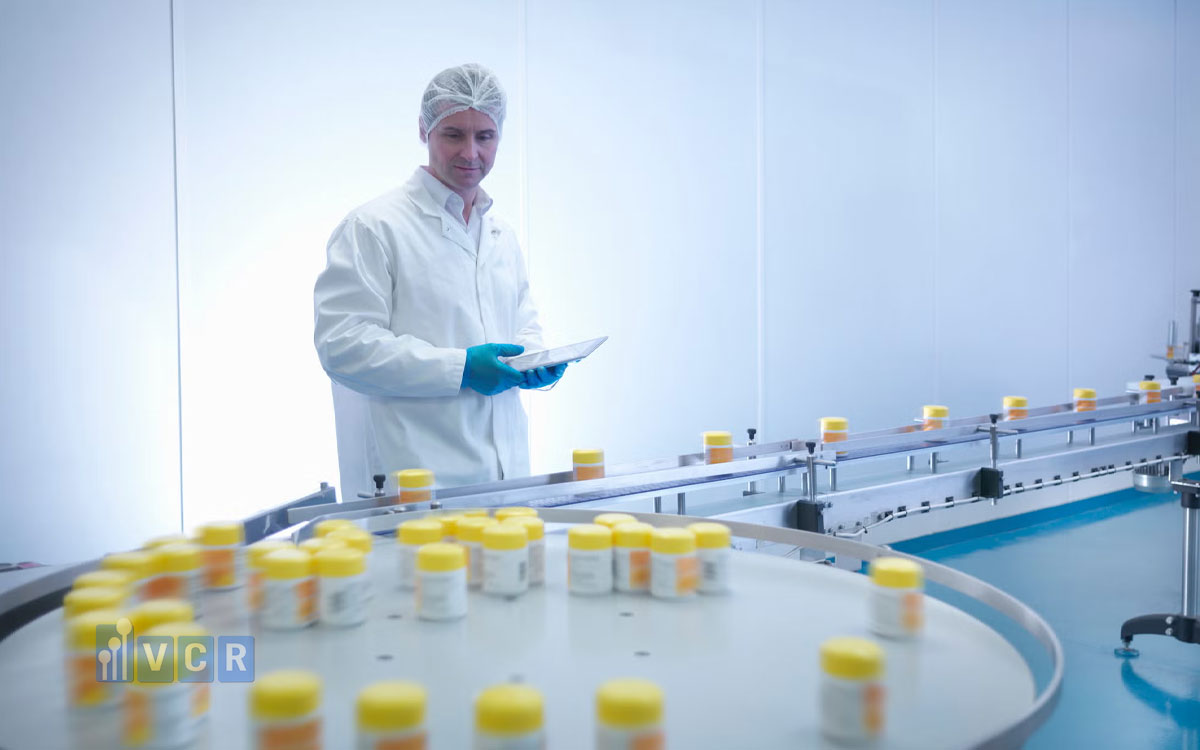
For ceiling-mounted filters, the complete filter surface, perimeter and all joints should be scanned.
Checking only a few fixed points is not equivalent to a complete leak scan. If leakage is detected, the manufacturer should identify the location, determine the cause and implement suitable corrective action.
Local repair should follow an approved method, remain within defined limits and be followed by retesting. If the damaged area or number of repairs becomes excessive, filter replacement may be more appropriate.
Pressure drop across the filter should also be monitored to identify increasing resistance.
However, low pressure drop does not prove that a filter is leak-free, and high pressure drop should not be the only criterion used to decide when replacement is necessary.
After filter replacement or major intervention, the manufacturer should assess whether additional tests are required, including airflow volume, air velocity, room pressure, recovery time and cleanroom reclassification.
Cleaning, Disinfection and Personnel Practices
Read more: Sterilizing, disinfecting and cleaning a cleanroom: What's the difference?
A cleanroom does not remain clean solely because the incoming air is filtered. Surfaces, equipment and tools may still accumulate residues and microorganisms if cleaning and disinfection are ineffective.
Inspectors often review cleaning procedures, chemical types, use concentrations, contact times, preparation methods and storage conditions. Requirements written in procedures must be realistically achievable.
For example, if a procedure requires the surface to remain wet for a defined period, the applied volume and wiping method must maintain the required wet-contact time.
Wiping the surface dry immediately after application may reduce disinfectant effectiveness.
Disinfectants should be evaluated against microorganisms likely to be found in the facility. The manufacturer should not rely only on general supplier data without considering actual surface materials, concentrations, temperatures and contact times.
The use of sporicidal agents should be based on risk. Rotating several disinfectants does not automatically make the program more effective. The scientific rationale and frequency of use should be supported by data. Inspectors may also review disinfectant preparation.
Containers should be clearly identified, assigned an appropriate expiry period after preparation and controlled to prevent mix-ups. Cleaning sequences should prevent contamination from being transferred from dirty to clean areas or from lower-risk surfaces to critical surfaces.
Cleaning tools should be segregated and stored appropriately. Cleaning records are often compared with actual room conditions. If records indicate that cleaning has been completed but dust, stains or residues remain visible, inspectors may question the reliability of the entire documentation system.
Personnel are also among the largest sources of particles and microorganisms in cleanrooms. Garments reduce contamination release but cannot eliminate it. Inspectors may directly observe gowning, handwashing, glove disinfection and movement inside the cleanroom.
The gowning sequence should be appropriate for the changing-room design and should prevent clean garments from touching floors, dirty benches or uncontrolled surfaces. Rapid movement can increase particle release and disturb airflow.
Leaning over exposed products, placing hands above critical areas or resting against equipment may create contamination risks. For aseptic processing, operators should understand that clean air must reach critical products and surfaces before passing over hands, bodies or other objects.
Inspectors may interview operators at the workplace about alarm response, environmental limits, glove damage and conditions that require production to stop. Training should not be demonstrated only through attendance signatures.
Practical competence should be assessed through observation, personnel-monitoring results and the ability to maintain correct behaviour over time.
Maintenance, Calibration, Qualification and Change Control
Cleanroom performance depends on many instruments and control devices, including pressure sensors, temperature and humidity sensors, airflow devices, particle counters, alarm systems and building management systems.
Inspectors often review critical-equipment lists, maintenance programs and calibration status.
Calibration and maintenance frequencies should not be assigned arbitrarily. They should reflect equipment recommendations, operating history, stability and process risk.
When an instrument is found outside tolerance during calibration, the manufacturer must conduct a retrospective impact assessment. The assessment should determine when the instrument may have become inaccurate, which data may be affected and which product batches were manufactured during the relevant period.
A passing calibration result after adjustment is not sufficient when the as-found error exceeded the approved tolerance. The magnitude, direction and potential effect of the error must be evaluated. Preventive maintenance should be completed within approved timeframes.
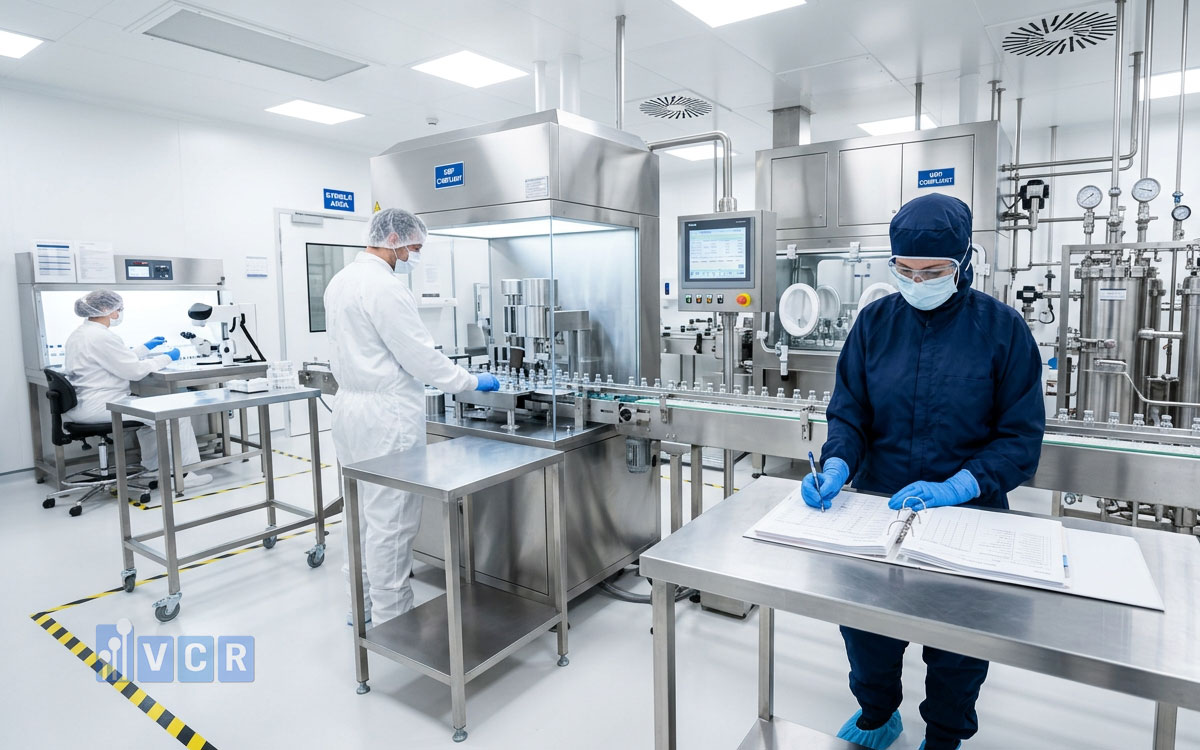
Repeated extensions without risk assessment may increase the likelihood of unexpected failure. Maintenance work inside a cleanroom may itself generate dust, oil, dirty tools or open systems.
Procedures should therefore define area protection, post-maintenance cleaning and the conditions required before returning the room to service.
Cleanroom qualification is not merely a collection of test reports. The documents should create a clear evidence chain showing that the system was properly designed, correctly installed, operated as intended and capable of maintaining required performance under actual use conditions.
The User Requirement Specification should define the process needs, cleanliness grades, pressure differentials, temperature, humidity, alarm functions, construction materials and documentation requirements.
- Installation Qualification verifies equipment, materials, locations and technical documentation.
- Operational Qualification checks functions, alarms and interlocks.
- Performance Qualification demonstrates that the cleanroom meets requirements under realistic operating conditions.
Typical tests include HEPA filter integrity, airflow volume and velocity, air-change rate, pressure differentials, temperature, humidity, particles, recovery time and airflow visualization.
Acceptance criteria should be defined and approved before testing begins. If a test fails, the cause should be investigated before the test is repeated. The original failure should not be disregarded merely because the subsequent result is acceptable.
Requalification should be performed at defined intervals and after changes that may affect performance. Filter replacement, airflow adjustment, equipment relocation, layout modification and ceiling repairs should all be assessed through the change-control system.
Deviations, Alarms and Data Integrity
Cleanroom systems may generate alarms during normal operation. Inspectors do not necessarily expect a facility to have no alarms. They expect alarms to be detected, assessed and managed correctly.
A pressure alarm may result from a door opening, fan-speed change, increased filter resistance or sensor failure. Each cause has a different potential impact and should be distinguished through data. Alarm-response procedures should define the responsibilities of production, engineering and quality assurance.
Personnel should know when operations may continue, when they must be paused and when product must be placed on hold. Deviation records should accurately describe the time, location, activity in progress and immediate action taken.
Statements such as “system corrected and normal” are not sufficient for a meaningful impact assessment. Root-cause investigations should consider equipment, personnel, procedures, environment and management systems.
Human error should not automatically be assigned as the cause before design and working conditions have been examined.
Product-impact assessments should consider the duration and extent of the loss of control, the condition of the product, its exposure level and the availability of other protective barriers.
Corrective and preventive actions should address the underlying cause rather than only the visible symptom.
If a door repeatedly fails to close, retraining operators may not be sufficient when the real problem is a weak door closer or misaligned latch. The effectiveness of corrective actions should be verified after implementation.
If the same alarm continues to recur, the previous action may not have been effective. Repeated deviations, overdue investigations, frequent attribution to operator error and routine reliance on retraining are warning signs that may cause inspectors to expand their review.
Cleanroom data may be generated from local gauges, paper records, building management systems, environmental-monitoring software and particle-counter applications. Inspectors may compare data from different sources to identify inconsistencies. For example, a production log may state that conditions were normal while the electronic system shows pressure alarms during the same period.
Electronic systems should have appropriate access control. Operators should not be able to change alarm limits, delete data or modify critical configuration settings without authorization.
Audit trails should record significant actions such as limit changes, monitoring-point deactivation, alarm acknowledgement and system-time adjustment.
If the monitoring system loses communication or stops recording, the manufacturer should implement an alternative monitoring method. Data should be attributable, legible, contemporaneous, original, accurate, complete, consistent and retrievable throughout the required retention period. Retaining only summary reports without raw data may prevent effective investigation.
Common Deficiencies and Preparation Before a GMP Inspection
A common deficiency is a pressure-cascade arrangement that does not support the intended contamination-control objective.
A manufacturer may establish pressure solely according to cleanliness classification without adequately considering product containment or cross-contamination. Another weakness is checking pressure differential only once per day when the risk requires more frequent or continuous monitoring.
If pressure control is lost between manual readings, the event may remain undetected. Differential-pressure instruments may have unsuitable measuring ranges, overdue calibration, zero errors or kinked pressure tubing, making their readings unreliable.
For HVAC systems, some facilities focus heavily on air-change rate while failing to assess airflow direction, stagnant zones and recovery performance.
Environmental-monitoring points may be selected for convenience rather than risk. A program may include many locations but still miss exposed-product areas or frequent intervention points.
Another weakness is reviewing individual results without evaluating trends. Repeating a test after an unacceptable result without investigating the original failure is also a common concern. A later passing result does not invalidate the initial result.
Smoke-study records may not cover actual interventions, may be difficult to interpret or may have been recorded only while equipment was idle.
Cleaning-related deficiencies often include insufficient contact time, expired prepared disinfectants, poor segregation of cleaning tools or inadequate cleaning of inaccessible surfaces.
Disabled interlocks, simultaneous door opening or suppressed door alarms indicate that the system is being operated contrary to its intended design. Inspection preparation should not begin with cosmetic improvements. The first step should be an honest assessment of the cleanroom’s current state of control.
The manufacturer should review the Contamination Control Strategy, risk assessments, zoning drawings and pressure-cascade diagrams. Documents must accurately reflect the operating facility. As-built drawings should be compared with actual conditions. Any added equipment, modified doors, relocated workbenches or changed room functions should be identified and assessed.
Pressure, temperature, humidity, particle and microbiological data should be reviewed for trends. Repeated alarms should be investigated before the inspection.
If permanent correction has not yet been completed, there should be a documented risk assessment, effective interim controls and a clear action plan.
Alarm systems and door interlocks should be functionally tested. Operators should understand how to respond to failures.
Calibration and maintenance status should be reviewed for all critical equipment. Qualification documentation should be organized logically from user requirements through design, installation, operation and performance.
The manufacturer should also conduct a realistic mock inspection that includes direct observation and data tracing, rather than only reviewing a document checklist.
Personnel should be trained to understand their responsibilities and the critical parameters in their areas.
The objective is not to memorize scripted answers but to understand the purpose of each control.
Equipment Supplier Support, Frequently Asked Questions and Conclusion
Responsibility for GMP compliance remains with the manufacturing facility and its pharmaceutical quality system. An equipment supplier cannot replace the quality-assurance department, design consultant or qualification organization.
However, selecting appropriate equipment and obtaining complete technical documentation from the beginning can significantly reduce risks during installation, qualification, operation and inspection.
Differential-pressure gauges should have appropriate measuring ranges, accuracy and display formats.
Pass boxes should be suitable for material flow and cleanroom classification. Cleanroom doors and interlocking systems should meet actual operating requirements. High-efficiency particulate air filters should have the correct efficiency class and dimensions for the system.
Suppliers should support contractors and project teams with drawings, technical specifications, operating manuals, quality documents and calibration records when required.
As a cleanroom equipment supplier supporting cleanroom contractors, Vietnam Cleanroom Equipment - VCR provides technical support for selecting differential-pressure gauges, pass boxes, cleanroom doors, interlocking systems, high-efficiency particulate air filters, unidirectional-airflow equipment and other cleanroom accessories for different project conditions.
Equipment should be selected according to the User Requirement Specification, contamination-control objectives and risk assessment rather than only by purchase price or isolated catalogue parameters.
Do GMP inspectors directly measure room pressure differentials?
Inspectors may observe readings on local gauges, compare them with approved limits and review historical data. In some cases, they may ask the manufacturer to demonstrate how the instrument or alarm is verified. The focus is not only the value displayed during the inspection but also whether the pressure differential has been maintained throughout production.
Do inspectors expect continuous pressure-differential data?
This depends on the risk and criticality of the area. For critical zones, particularly sterile-manufacturing areas, continuous monitoring or automated alarming is generally expected more strongly. If the facility relies on periodic manual readings, it should justify why the selected frequency is sufficient to detect loss of control.
Is cleanroom classification sufficient without a Contamination Control Strategy?
No. A passing classification result does not replace a comprehensive Contamination Control Strategy. Particularly in sterile manufacturing, the facility should demonstrate that controls involving the building, HVAC, personnel, cleaning, monitoring and operations are connected within an integrated contamination-control system.
How often should a cleanroom be requalified?
The requalification frequency depends on the cleanliness grade, applicable GMP requirements, risk assessment and operating history. Requalification may also be required after changes that can affect performance, such as filter replacement, HVAC adjustment, layout modification or relocation of major equipment.
Do inspectors review smoke-study videos?
Yes. For unidirectional-airflow areas and aseptic operations, smoke-study videos are important evidence. Inspectors may review routine operations, interventions, exposed-product locations and airflow direction.
Should an increasing microbiological trend be investigated even when limits have not been exceeded?
Yes. Limits are not the only basis for assessing control. A continuous increase, repeated recovery of the same organism or more frequent alerts may indicate early deterioration of the system.
Must differential-pressure gauges be calibrated?
Measuring devices used to demonstrate critical cleanroom parameters should be controlled and verified for accuracy. Differential-pressure gauges therefore normally require calibration at an appropriate interval.
Can production continue if the door interlock fails?
Production should not automatically continue. The facility must assess the area classification, purpose of the interlock, type of failure and whether effective temporary controls can be applied. Any decision to continue should be scientifically justified and approved by quality assurance.
Is cleanroom requalification required after replacing a HEPA filter?
At minimum, the newly installed filter should undergo an in-place integrity test. Depending on the location, scope of work and risk assessment, additional tests may include airflow volume, velocity, pressure differentials, recovery time and room reclassification.
Do inspectors interview cleanroom operators directly?
Yes. Operators, cleaners, maintenance personnel and quality-control staff may all be questioned at the workplace. Inspectors assess whether personnel understand procedures, limits and responses to abnormal conditions.
Which cleanroom records are commonly requested first?
Depending on the inspection objective, inspectors may request cleanroom zoning drawings, HVAC diagrams, pressure-cascade drawings, qualification reports, the Contamination Control Strategy, environmental-monitoring data and deviation lists.
Conclusion and Contact for Cleanroom Equipment Support
A GMP inspection does not assess only whether a cleanroom meets its designated classification at one point in time. The more important objective is to determine whether the facility has established and maintained a reliable contamination-control system throughout the cleanroom life cycle.
Cleanroom design, HVAC performance, pressure differentials, filtration, personnel and material flows, cleaning, operator practices and environmental monitoring must work together as one integrated system.
Every critical parameter should be supported by reliable data, and every deviation should be evaluated for its potential effect on product quality. A cleanroom may appear visually well maintained but still become a major inspection concern if its data are inconsistent, alarms are routinely ignored or documentation does not reflect actual operations.
Conversely, a manufacturer that understands its risks, evaluates trends, investigates deviations transparently and continually improves its systems will have a stronger foundation for GMP compliance.
Inspection readiness should not be treated as a short-term activity. It should be the result of correct, controlled and well-documented operation every day. Inappropriate equipment selection, incomplete technical documentation or overdue calibration may create weaknesses during qualification and GMP inspection.
Cleanroom contractors and project implementation teams may contact Vietnam Cleanroom Equipment - VCR for support in selecting differential-pressure gauges, pass boxes, cleanroom doors, door-interlocking systems, high-efficiency particulate air filters, unidirectional-airflow equipment and other cleanroom accessories.
Determining the correct measuring range, configuration, construction material, alarm function and documentation requirements during the design stage can reduce modification risks, support qualification activities and improve inspection readiness.