





IQ, OQ and PQ Qualification Costs: Scope, Cost Factors and Reference Pricing
The cost of IQ, OQ and PQ qualification is an important part of the investment budget for cleanroom equipment, HVAC systems, production lines and controlled manufacturing facilities. The total cost is not determined solely by the purchase price of the equipment. It also depends on the qualification scope, applicable standards, number of tests, documentation requirements, measuring instruments, personnel and the possibility of repeat testing.
- Overview of IQ, OQ and PQ Qualification Costs
- What Are IQ, OQ and PQ?
- What Is Included in IQ, OQ and PQ Costs?
- Installation Qualification Cost
- Operational Qualification Cost
- Performance Qualification Cost
- Reference Costs for IQ, OQ and PQ by Equipment Type
- Qualification Costs by Cleanroom Project Size
- Factors That Increase or Reduce Qualification Costs
- How to Prepare an IQ, OQ and PQ Budget
- Should Qualification Be Performed Internally or Outsourced?
- Required Qualification Deliverables
- Common Mistakes When Requesting a Qualification Quotation
- How to Select an Equipment Supplier and Coordinate Qualification
- FAQ: Frequently Asked Questions About IQ, OQ and PQ Costs
- Request Equipment Consultation and an IQ, OQ and PQ Cost Estimate
In practice, two identical types of equipment, such as a Passbox, Air Shower or Dispensing Booth, may have very different qualification costs. A standard unit with complete documentation and correct installation will generally require less time and fewer corrective actions than equipment with multiple sensors, complicated control logic or stringent Good Manufacturing Practice requirements.
Companies should therefore calculate the cost of Installation Qualification, Operational Qualification and Performance Qualification during the planning stage rather than waiting until equipment installation has been completed. Early budgeting helps prevent delays during commissioning, factory acceptance, GMP inspection and formal production release.
This VCR's article explains the main components of IQ, OQ and PQ qualification costs, provides indicative pricing for cleanroom equipment and cleanroom systems in Vietnam, and offers practical guidance for preparing an accurate request for quotation.
Overview of IQ, OQ and PQ Qualification Costs
IQ, OQ and PQ are three important stages in the qualification of equipment, utilities, technical systems and controlled production areas. The purpose of qualification is to generate documented evidence showing that the equipment or system has been correctly installed, operates according to approved requirements and consistently performs as intended.
For pharmaceutical, biotechnology, cosmetics, medical device, food supplement and other controlled manufacturing facilities, qualification expenses should be included in the initial project budget. If a company calculates only equipment supply and installation costs, additional expenses may arise when the facility prepares for GMP certification, customer audits or regulatory inspections.
Qualification cost is not always directly proportional to equipment value. Some relatively inexpensive devices may require numerous tests, detailed documentation and traceable records. Conversely, expensive equipment supplied with complete factory documentation and standardized control systems may be easier and less costly to qualify.
A reliable IQ, OQ and PQ quotation normally requires information such as the equipment list, technical drawings, User Requirement Specification, applicable standards, operating conditions, number of measuring points and required deliverables. A quotation prepared using only the name of the equipment is unlikely to be sufficiently accurate.
It is also important to distinguish qualification from ordinary technical testing or cleanroom certification. Some measurements may be similar, but qualification includes approved protocols, predefined acceptance criteria, traceable raw data, deviation management, review, approval and a formal conclusion.
For example, a company may hire a testing provider to measure airborne particle concentration and air velocity. These tests alone do not necessarily constitute Performance Qualification. To be considered part of PQ, the tests should be performed according to an approved protocol, using calibrated instruments, with specified acceptance criteria and documented conclusions.
The qualification budget may also include consulting, protocol preparation, on-site testing, laboratory analysis, report preparation, deviation investigation and repeat testing. Therefore, the lowest initial quotation does not always represent the lowest total project cost.
What Are IQ, OQ and PQ?
IQ stands for Installation Qualification. It is the documented verification that equipment or a system has been supplied, installed and connected in accordance with approved design documents, manufacturer recommendations and user requirements.
During IQ, the qualification team may verify the equipment name, identification number, manufacturer, model, serial number, country of origin, construction materials, dimensions, power supply, installation location, wiring diagrams, piping connections, filters, sensors and measuring instruments.
IQ is not limited to confirming that the equipment is physically present. It also verifies whether the technical documentation is complete, accurate and traceable. Depending on the project, the documentation may include certificates of origin, certificates of quality, material certificates, filter test certificates, calibration certificates, operation manuals, maintenance instructions, electrical drawings and as-built drawings.
OQ stands for Operational Qualification. It is the documented verification that equipment or a system operates correctly throughout the specified operating ranges.
During OQ, individual functions are challenged under normal and abnormal conditions. Testing may include fans, lights, doors, alarms, pressure sensors, airflow sensors, emergency stops, variable-frequency drives and Programmable Logic Controllers.
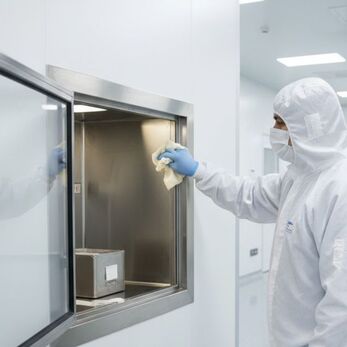
For a Dynamic Passbox, OQ may include testing the fan, lighting system, door Interlock, ultraviolet lamp where applicable, differential pressure, air velocity, alarm functions and time-delay settings.
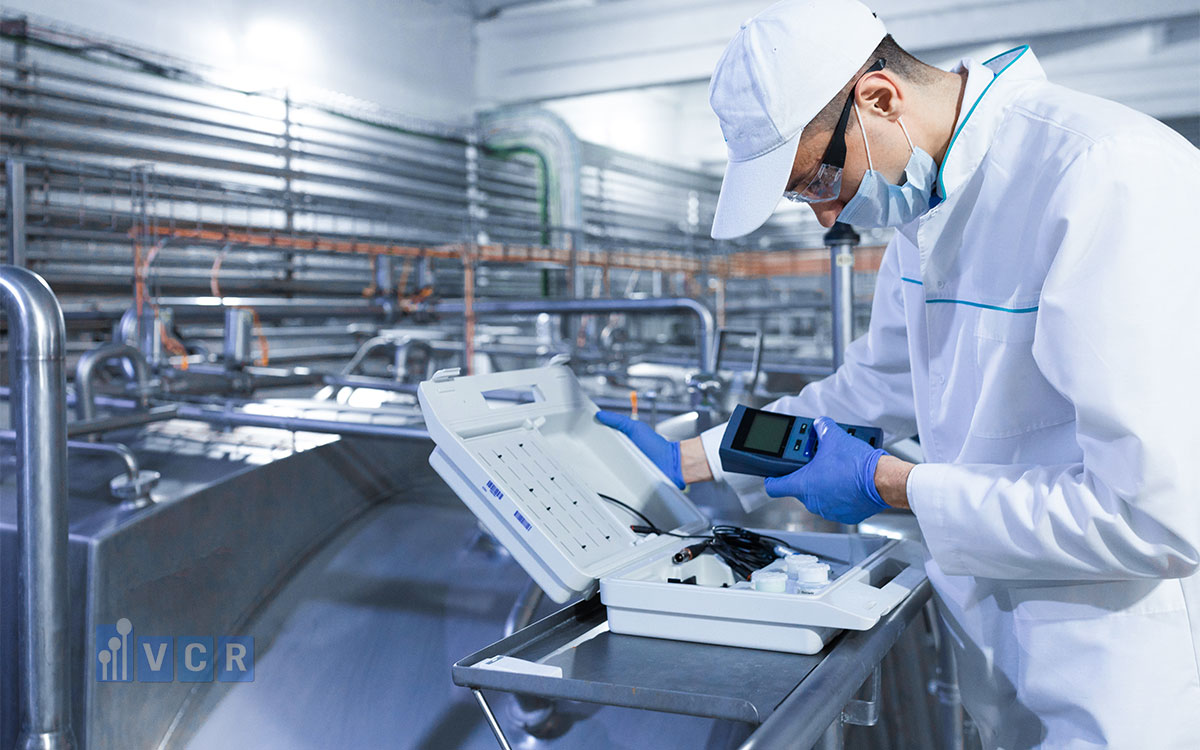
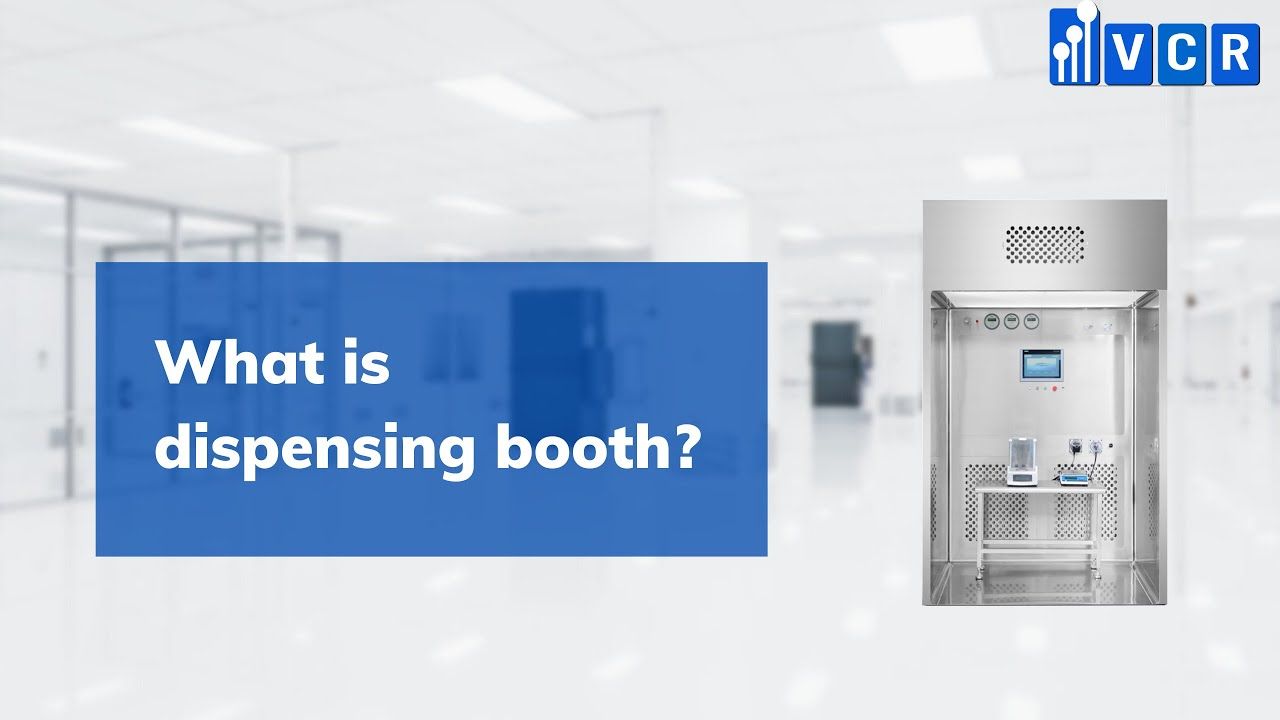
For a Dispensing Booth, the OQ scope may include the Programmable Logic Controller, Human-Machine Interface, airflow sensor, differential pressure transmitter, variable-frequency drive, filter alarms and low-airflow warnings.
PQ stands for Performance Qualification. It is the documented verification that equipment or a system can consistently achieve the required performance under actual or appropriately simulated operating conditions.
Performance Qualification may involve airborne particle counting, HEPA filter integrity testing, airflow velocity measurement, airflow volume measurement, room pressure differential testing, recovery time testing, airflow visualization, temperature measurement, relative humidity measurement, noise measurement, illumination measurement and microbiological environmental monitoring.
The exact PQ scope depends on the equipment type, cleanliness classification, production process, product risk and applicable regulatory requirements.
IQ, OQ and PQ are normally performed in sequence. Installation Qualification should be completed before Operational Qualification is approved. Operational Qualification should confirm that the equipment functions correctly before Performance Qualification is conducted.
If installation or operation has not been properly verified, a successful performance test at one particular moment may not provide sufficient assurance that the system is under reliable control.
Read more: IQ/OQ/PQ Qualification in Cleanroom Systems and GMP Equipment
What Is Included in IQ, OQ and PQ Costs?
The total qualification cost generally includes several groups of activities.
The first cost component is document review and initial assessment. Before preparing protocols, the qualification team needs to review technical specifications, drawings, equipment lists, control philosophies, operating procedures and applicable standards.
For larger projects, a site survey may be required. The survey allows the service provider to examine installation conditions, equipment accessibility, room layout, HEPA filter positions, sampling locations and possible safety requirements.
The second cost component is protocol and document preparation. Documents may include the Validation Master Plan, qualification plan, IQ protocol, OQ protocol, PQ protocol, test forms, instrument lists, traceability matrices, acceptance criteria and summary reports.
The Validation Master Plan is a high-level document describing the overall qualification and validation strategy of a facility or project. It may define responsibilities, system boundaries, documentation requirements, qualification stages and requalification policies.
The third component is on-site execution. This includes the working time of qualification engineers, cleanroom specialists, technicians and quality personnel. It may also include the transportation, setup and use of testing instruments.
The fourth component is testing and laboratory analysis. Some tests are performed directly on site, while microbiological or chemical samples may need to be sent to a qualified laboratory.
The cost of microbiological testing depends on the number of samples, types of culture media, incubation conditions, incubation duration and reporting requirements. Active air sampling, settle plates, contact plates and personnel monitoring may be priced separately.
The fifth component is data processing and reporting. Test results need to be reviewed, calculated where necessary and compared against approved acceptance criteria. Raw data, photographs and instrument records may need to be attached to the final report.
The sixth component is deviation management. A deviation is any result or observation that does not comply with the approved protocol, acceptance criteria or expected condition.
Deviation management may include documenting the problem, assessing its impact, identifying the root cause, defining corrective actions and repeating affected tests. Depending on the commercial agreement, repeat testing may be included in the original quotation or charged separately.
Travel, accommodation, transportation of testing instruments, scaffolding, lifting equipment, after-hours work and weekend work may also be additional cost items.
Installation Qualification Cost
IQ cost is strongly influenced by the number of equipment items, the complexity of each system and the quality of the technical documentation.
A simple Static Passbox normally requires fewer checks than a Dispensing Booth equipped with a Programmable Logic Controller, Human-Machine Interface, multiple pressure sensors, airflow sensors, alarms and several filtration stages.
Typical IQ checks include equipment identification, dimensions, construction materials, surface finish, electrical supply, installation position, door opening direction, airflow connections, piping, electrical diagrams, control panels and major components.
If the equipment contains differential pressure gauges, airflow sensors, temperature sensors, relative humidity sensors or other measuring devices, their calibration status may also need to be verified.
IQ costs may increase when the actual installation does not match approved drawings. For example, a drawing may specify an HEPA H14 filter, while the installed filter label does not clearly state the filter class or relevant test standard.
In such a situation, the qualification team may need to issue a deviation, request additional evidence from the manufacturer or perform further verification.
The cost may also increase when the equipment consists of components from several different suppliers. The qualification team needs additional time to verify the manufacturer, model, technical compatibility and documentation of each critical component.
Imported equipment with incomplete documentation or documents available only in Chinese may require translation, technical clarification and document standardization before IQ can be approved.
Another common issue is the absence of as-built drawings. An as-built drawing shows the final installed condition rather than the original design intention. If changes were made during fabrication or installation, the final drawing should be updated accordingly.
Companies can reduce IQ costs by requiring complete technical documentation in the equipment purchase contract. The required documents may include:
- Approved technical drawings
- As-built drawings
- Bill of materials
- Major component list
- Electrical diagrams
- Control diagrams
- Material certificates
- HEPA filter certificates
- Calibration certificates
- Operation manuals
- Maintenance manuals
- Factory test records
- Installation records
Complete and consistent documentation helps reduce inspection time, deviations and repeated communication among the equipment supplier, contractor, qualification provider and end user.
Operational Qualification Cost
OQ may cost more than IQ when equipment contains complex controls, multiple alarms or important safety functions. During OQ, the qualification team does not simply observe the equipment operating. Each function needs to be challenged, recorded and compared against predefined acceptance criteria.
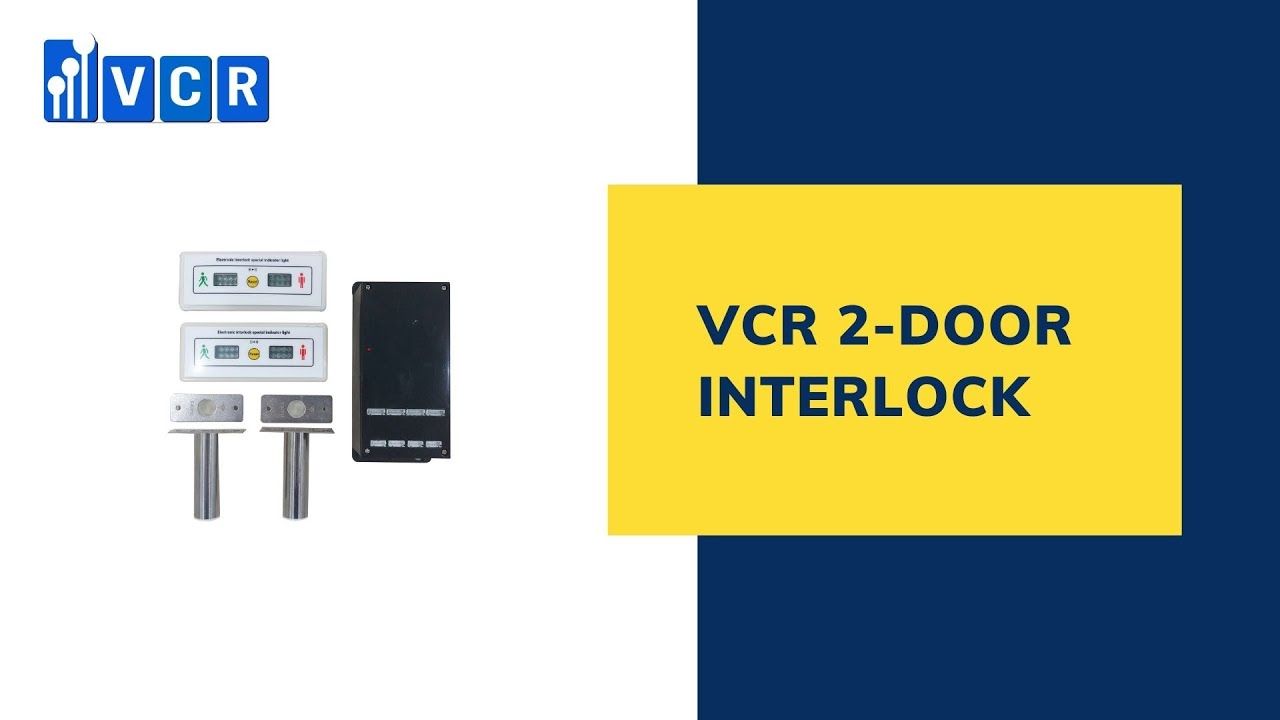
- For a Passbox equipped with a door Interlock, the OQ protocol should confirm that both doors cannot be opened at the same time. When one door is open, the opposite door should remain locked. Door indicators, buzzers, push buttons and time-delay functions should operate according to the approved control logic.
- For an Air Shower, OQ may include testing the entry sequence, exit sequence, door Interlock, blowing duration, fan operation, nozzle performance, lighting, emergency stop and recovery after a power interruption.
- For a Dispensing Booth, the OQ scope may be more complicated. It may include the supply fan, return fan, variable-frequency drive, airflow sensors, filter pressure sensors, alarm set points, low-airflow alarm and Human-Machine Interface functions.
The qualification team may also check password levels, user access rights, alarm history, parameter settings and the ability to restore approved settings. OQ costs increase according to the number of functions, input signals, output signals, alarms and operating scenarios.
For example, testing a low-airflow alarm may require a controlled reduction in fan speed, partial restriction of airflow or simulation of a sensor signal. The method should be safe, technically justified and described in the approved protocol.
A technician should not damage a sensor or create an uncontrolled fault simply to demonstrate an alarm. Where possible, the system should include a test mode, simulation function or controlled method of changing the relevant process condition.
Where computerized controls or electronic data are used, OQ may also include user account testing, access control, audit trails, data backup, data recovery and data integrity checks.
In such cases, the qualification cost is no longer limited to mechanical and electrical functions. It may also include elements of Computerized System Validation.
OQ costs can be reduced when the equipment supplier provides a clear control philosophy, input-output list, alarm list, functional description and Factory Acceptance Test records.
Factory Acceptance Testing is performed at the manufacturer’s factory before delivery.
Although FAT does not replace OQ at the final installation location, comprehensive FAT records can reduce uncertainty and help prepare more efficient OQ protocols.
Performance Qualification Cost
PQ is often the most expensive stage because it requires more testing instruments, more time on site and, in some cases, laboratory analysis.
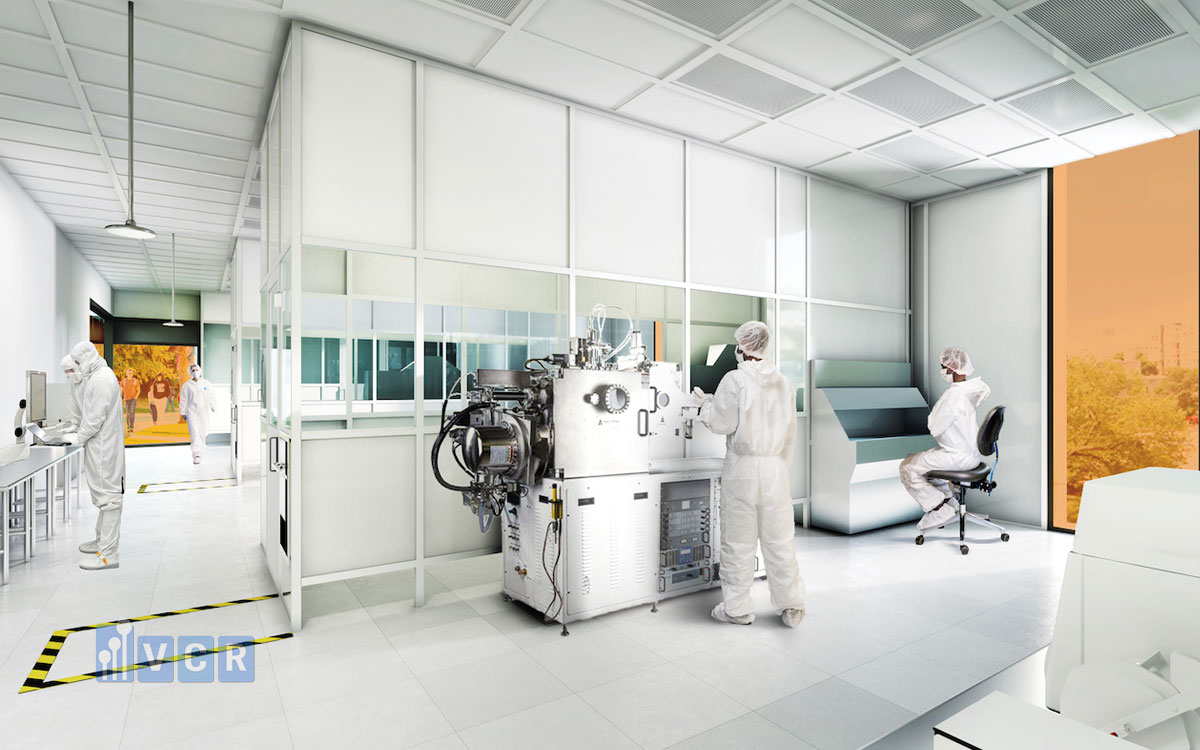
For a cleanroom, PQ may be performed in one or more operational states.
- The As-Built state refers to a condition in which construction is complete, all services are connected and operating, but production equipment, materials and personnel are not present.
- The At-Rest state refers to a condition in which the cleanroom installation is complete and production equipment is installed and operating as agreed, but no production personnel are present.
The Operational state refers to a condition in which the cleanroom is operating according to the specified process with the defined number of personnel working in accordance with approved procedures.
The number of states included in the PQ scope directly affects the total cost. Testing the cleanroom only in the At-Rest state will cost less than performing a complete assessment in the As-Built, At-Rest and Operational states.
Airborne particle classification requires the number of sampling locations to be determined according to the room area and applicable standard. Larger rooms normally require more sampling locations. The test cost also increases when multiple particle sizes, repeated measurements or several room conditions are required.
HEPA filter integrity testing requires aerosol generation equipment, a photometer or suitable particle-counting method, trained personnel and safe access to the filter face. Rooms with high ceilings, difficult filter access or large numbers of HEPA filters may require scaffolding, mobile platforms or additional technicians. These requirements can significantly increase the cost.
Airflow velocity and volume measurements may be performed at HEPA filter faces, terminal outlets, work zones or return-air grilles. The number of measurement points depends on the equipment design and qualification protocol. Airflow visualization uses smoke or another suitable visualization medium to demonstrate airflow direction, turbulence, dead zones and protection of critical areas.
The test may be relatively simple for a basic cleanroom. However, it becomes more expensive when the customer requires multiple operating scenarios, high-quality video recording, operator simulations or detailed visual analysis.
Recovery time testing measures how quickly a cleanroom returns from a contaminated condition to the specified cleanliness level. It requires controlled particle generation, repeated particle measurements and stable HVAC operation.
Microbiological qualification may create separate costs because it requires suitable culture media, sampling devices, incubation, laboratory handling and interpretation.
Results may take several days because samples need to be incubated before colonies can be counted. This can extend the overall PQ reporting schedule.
PQ should only begin when IQ and OQ are complete, the HVAC system has been balanced, HEPA filters have been checked and the cleanroom has been properly cleaned.
If PQ is performed before the system is technically ready, there is a high risk of test failure and repeated testing.
Reference Costs for IQ, OQ and PQ by Equipment Type
There is no single fixed price that applies to every project. The following ranges are indicative budgeting figures for projects in Vietnam. They are not official quotations.
Actual costs should be confirmed after reviewing equipment specifications, qualification scope, applicable standards, site location and required tests.
| Equipment or system | Typical qualification scope | Indicative cost |
| Static Passbox | IQ, dimensions, materials, door Interlock and basic functional checks | VND 8-18 million |
| Dynamic Passbox | IQ, OQ, airflow velocity, differential pressure, HEPA filter and door Interlock | VND 15-35 million |
| Air Shower | IQ, OQ, door sequence, blowing time, airflow velocity and alarms | VND 15-40 million |
| FFU or HEPA Box | Installation checks, operation, airflow measurement and HEPA filter integrity testing | VND 6-15 million per equipment group |
| Laminar Air Flow unit | IQ, OQ, airflow velocity, uniformity, particle counting and airflow visualization | VND 20-55 million |
| Dispensing Booth | IQ, OQ, PQ, control functions, alarms, airflow pattern and cleanliness testing | VND 40-100 million |
| Clean Booth | IQ, OQ, PQ, cleanliness classification, airflow, particles and pressure differential | VND 40-120 million |
| HVAC system | Documentation, operating functions, air balancing, pressure differential and environmental testing | VND 50-250 million |
| Cleanroom area | IQ, OQ and PQ according to room area, number of rooms and cleanliness class | VND 80-500 million or more |
These prices may exclude Value Added Tax, travel, accommodation, scaffolding, lifting equipment, microbiological tests, additional calibration, repairs and repeat tests following a failed result.
The unit cost of qualifying one piece of equipment is often higher than the average cost per unit when several pieces of equipment are qualified at the same site. This is because mobilization, instrument transportation, protocol preparation and reporting costs can be distributed across a larger number of equipment items.

Where many identical pieces of equipment are included, a standardized protocol template may be developed. Each unit should still be individually identified, inspected and documented, but the common protocol structure can reduce preparation time.
Projects requiring EU GMP compliance, bilingual documentation, electronic data review or participation in meetings with international auditors may have considerably higher costs than ordinary technical testing.
A quotation should clearly state which tests, documents and services are included. It should also identify exclusions and the commercial conditions for repeat testing.
Qualification Costs by Cleanroom Project Size
A small project may include one or two independent cleanroom devices or a limited controlled area.
For example, a weighing room with one Dispensing Booth, one Passbox and a local ventilation system may be qualified as a dedicated package. The cost will depend mainly on the number of tests and the condition of the available documentation.
A medium-sized project may include several functional rooms, a shared HVAC system and dozens of cleanroom devices. At this scale, a qualification plan, responsibility matrix and coordinated execution schedule become important. Qualification work must be integrated with installation, commissioning, air balancing and production preparation.
A large project, such as a pharmaceutical factory, medical device factory, biotechnology facility or research center, may contain multiple Air Handling Units, several cleanliness grades and numerous production systems.
The cost of IQ, OQ and PQ may represent a significant portion of the final commissioning and project handover budget.
Room area is not the only factor. Two cleanrooms with the same floor area may have different qualification costs because they contain different numbers of HEPA filters, pressure zones, sampling locations and microbiological requirements.
The number of HVAC systems is also important. A facility with ten rooms served by one Air Handling Unit may require a different qualification strategy from ten rooms served by five independent Air Handling Units.
Renovation projects often involve greater uncertainty than new facilities. Existing drawings may not match actual conditions, equipment may have been modified and historical calibration records may be incomplete.
For renovation projects, an initial technical survey is strongly recommended before a final quotation is prepared.
Location also affects the cost. Projects in Hanoi, Ho Chi Minh City, Bac Ninh, Hung Yen, Hai Phong, Dong Nai and Binh Duong may be easier to support because qualification providers and testing resources are more readily available.
Factories located far from major industrial centers may incur additional travel, accommodation and instrument transportation expenses.
Factors That Increase or Reduce Qualification Costs
The applicable standard is one of the most important cost factors. A project using only internal acceptance criteria may require a narrower scope than a project designed to comply with World Health Organization GMP, EU GMP, ISO 14644 or specific international customer requirements.
The number and variety of equipment also affect the cost. A large quantity of identical equipment allows protocol templates and testing methods to be standardized.
A project containing many different equipment types requires more individual protocols, test methods and acceptance criteria.
Documentation quality directly affects the number of engineering hours required. Complete, consistent and approved documentation enables IQ to proceed efficiently.
Missing equipment identification, absent certificates, outdated drawings or incomplete operation manuals may lead to additional review time and deviations.
The number of PQ tests is another major factor. A package containing only particle counting and airflow velocity measurement will cost less than a comprehensive package that also includes HEPA integrity testing, recovery testing, airflow visualization, noise, illumination, temperature, humidity and microbiological monitoring.
The technical readiness of the system is equally important. If equipment has been installed, adjusted, cleaned and commissioned before qualification, it is more likely to pass during the first execution.
If the HVAC contractor has not completed air balancing or the filter installation has not been checked, repeat testing may be necessary.
Cleanliness class affects both the testing method and the required level of control. A critical ISO Class 5 work zone generally requires more stringent testing than a less critical support room.
Accessibility can also increase cost. HEPA filters installed at high elevations, equipment located in restricted technical spaces or areas requiring special safety permits may require additional personnel and access equipment.
The required documentation language may also influence the price. Bilingual Vietnamese-English protocols and reports require additional preparation, review and translation.
Urgent execution, night work, weekend work or work during production shutdowns can increase personnel and logistical costs.
Companies can control qualification expenditure by defining the scope early, preparing complete documentation and coordinating all relevant parties before testing begins.
How to Prepare an IQ, OQ and PQ Budget
The first step is to prepare a complete list of systems and equipment requiring qualification.
The list should include the equipment name, identification number, quantity, location, manufacturer, model, function and impact on product quality.
A risk-based approach should be used to determine which systems require full qualification. Equipment that directly affects product quality, contamination control, critical environmental conditions or data integrity normally requires greater qualification attention.
The next step is to define the applicable standards and acceptance criteria. The request for quotation should not simply ask for “complete qualification” because different suppliers may interpret this phrase differently.
The required tests and deliverables should be clearly listed before the contract is signed. The budget can be divided into the following categories:
- Document preparation
- On-site qualification execution
- Testing equipment
- Laboratory analysis
- Travel and accommodation
- Reporting
- Deviation management
- Repeat testing
- Contingency for corrective work
This structure makes it easier to compare quotations and identify why one supplier’s price differs from another.
A Responsibility Matrix should also be prepared. It should define the obligations of the owner, equipment supplier, cleanroom contractor, qualification service provider and quality assurance department.
The equipment supplier is normally responsible for technical documents, equipment configuration, operation instructions and support related to equipment functions.
The cleanroom contractor is normally responsible for installation, utility connections, HVAC adjustment, air balancing and construction completion.
The qualification service provider performs inspections, testing and documentation within the agreed scope.
The owner’s Quality Assurance department normally reviews and approves qualification protocols, deviations and final reports.
The budget should include a contingency for filter replacement, airflow adjustment, alarm correction, sensor replacement and repeat testing.
However, the contract should clearly define which party is responsible for repeat testing when the initial failure is caused by equipment, installation, operating conditions or changes requested by the owner.
For large projects, IQ, OQ and PQ requirements should be included in the procurement contract from the beginning. This helps ensure that suppliers provide suitable documentation and design equipment that can be effectively qualified.
Should Qualification Be Performed Internally or Outsourced?
A company with an experienced quality and engineering team may prepare and execute some IQ, OQ and PQ activities internally.
This approach provides greater control over the schedule and allows the qualification process to benefit from detailed knowledge of the equipment and production process.
However, internal execution requires personnel who understand GMP, risk management, cleanroom technology, measurement methods, data integrity and documentation control.
The company must also own or rent calibrated testing instruments suitable for the required tests.
Outsourcing is appropriate when the company does not have sufficient technical resources, requires independent evidence or needs specialized tests.
An external qualification provider may already have particle counters, airflow meters, photometers, aerosol generators, pressure meters, temperature and humidity data loggers and microbiological sampling equipment.
The provider may also have standardized templates and experience in handling deviations.
A combined approach is often the most effective.
The owner’s Quality Assurance team approves the qualification strategy and acceptance criteria. The equipment supplier supports technical information. The cleanroom contractor prepares the system and corrects technical issues. The external qualification provider performs independent testing and prepares reports.
Regardless of the chosen arrangement, the company operating the facility remains responsible for approving and maintaining the qualified state.
Outsourcing qualification activities does not transfer regulatory responsibility away from the equipment user.
Required Qualification Deliverables
A complete qualification package normally begins with an approved protocol.
The protocol should define the objective, scope, responsibilities, reference documents, equipment identification, test methods, measuring instruments and acceptance criteria.
The execution records should contain actual results, observations, signatures and dates. Each test should identify the person who performed the work and the person who reviewed it.
Blank fields should not be left without explanation. Where an item is not applicable, it should be marked Not Applicable and justified where necessary.
Calibration certificates for the instruments used during testing are essential. The certificate should remain valid on the date of testing and should clearly identify the instrument. The calibration range and measurement uncertainty should be suitable for the intended test.
Raw data should be retained. Depending on the test, raw data may include instrument printouts, electronic files, photographs, videos, particle count records, airflow readings and microbiological laboratory results.
Any deviation should be documented. The record should describe what occurred, identify the affected test, assess the impact and define the necessary corrective action.
Corrective and Preventive Action may be required for significant or recurring deviations. After correction, the affected test should be repeated where necessary. The new result should be linked to the original deviation record.
The final summary report should clearly state whether the equipment or system is accepted, conditionally accepted or rejected.
A collection of test data without an approved conclusion is not equivalent to a complete qualification package.

The final deliverables may include:
- Approved IQ protocol and report
- Approved OQ protocol and report
- Approved PQ protocol and report
- Instrument list
- Calibration certificates
- Raw data
- Photographs and video records
- Laboratory reports
- Deviation records
- Corrective action records
- Repeat test results
- Qualification summary report
The documents should be controlled, approved and archived according to the company’s quality management system.
Common Mistakes When Requesting a Qualification Quotation
One of the most common mistakes is sending only the equipment name without technical specifications.
Two Dynamic Passboxes may differ in dimensions, airflow capacity, number of doors, filter configuration, sensors, controls and operating modes. A quotation based only on the equipment name may omit important tests or include incorrect assumptions.
Another mistake is confusing technical testing with qualification.
A quotation covering only particle counting and airflow measurement may be much lower than a complete package including protocol preparation, IQ, OQ, PQ, deviation management and final reporting.
Some companies request quotations without identifying the applicable standard. As a result, different suppliers may propose completely different scopes.
The lowest quotation may simply exclude important tests, documentation or review activities.
Another common problem is failing to review repeat-testing conditions. The customer should understand how many test attempts are included and how additional visits will be charged.
The contract should also define responsibility when equipment fails because of manufacturing defects, installation errors, poor HVAC balance or inappropriate operating conditions.
Performing PQ too early is another costly mistake. Before PQ begins, the construction work should be complete, the room should be cleaned, the HVAC system should be balanced, HEPA filters should be installed correctly and all relevant operating functions should be stable.
Qualification should not be treated as the first commissioning activity.
Companies should also avoid selecting providers based only on price. The quality of protocols, calibration evidence, raw data, deviation handling and final conclusions is essential.
A low-cost report that cannot withstand a GMP audit may result in greater corrective costs later.
How to Select an Equipment Supplier and Coordinate Qualification
The selected provider should understand cleanroom equipment, HVAC systems, GMP expectations and qualification documentation.
This combination of expertise helps ensure that the proposed test scope is technically appropriate and that communication among the owner, contractor and equipment supplier is effective.
Companies should evaluate the provider’s project experience, personnel qualifications, testing instruments, calibration status and sample documents.
A professional quotation should clearly state the scope, standards, test methods, deliverables, schedule, assumptions and exclusions.
Equipment suppliers also play an important role in reducing qualification costs.
Equipment supplied with complete drawings, filter certificates, major component lists, electrical diagrams and operation manuals is easier to qualify.
Equipment design should also allow access to filters, sensors and test locations. Poor accessibility can make testing difficult and increase qualification costs.
Vietnam Cleanroom Equipment supplies Passboxes, Air Showers, Fan Filter Units, HEPA Boxes, Laminar Air Flow units, Clean Booths and Dispensing Booths to cleanroom contractors and industrial customers.
Within the equipment supply scope, Vietnam Cleanroom Equipment can support technical specifications, equipment drawings, operation documents and coordination activities required to prepare equipment for IQ, OQ and PQ.
The equipment supplier, cleanroom contractor and independent qualification provider may be separate organizations. Their responsibilities should be defined before execution.
A clear responsibility structure reduces disputes, prevents duplicated work and helps control additional costs.
FAQ: Frequently Asked Questions About IQ, OQ and PQ Costs
- Are IQ, OQ and PQ costs included in the equipment price?
This depends on the supply contract. Some suppliers include only equipment manufacturing, delivery, installation and commissioning. Qualification protocols, on-site tests and final reports may be offered as separate services.
The purchaser should confirm whether the price includes protocol preparation, calibrated testing instruments, execution, reports, calibration certificates, deviation handling and repeat testing.
Where qualification is required, the expected scope should be stated in the purchase order or technical agreement.
- How much does IQ, OQ and PQ qualification cost?
Simple equipment may require a budget ranging from several million to several tens of millions of Vietnamese dong.
Complex equipment such as a Dispensing Booth, Clean Booth or HVAC system may cost tens or hundreds of millions of Vietnamese dong to qualify.
A complete cleanroom facility may require a much larger budget, depending on the number of rooms, HEPA filters, cleanliness classes, operating states and microbiological requirements.
A reliable price can only be provided after the scope and technical details have been reviewed.
- Which stage is normally the most expensive?
PQ is often the most expensive stage because it requires more instruments, more testing time and sometimes laboratory analysis.
However, OQ may represent a large part of the cost for equipment with complex control systems, numerous alarms, electronic records and multiple operating modes.
IQ may also become expensive if the documentation is incomplete or the actual installation does not match the approved design.
- Which cleanroom equipment requires IQ, OQ and PQ?
Equipment that affects cleanliness, contamination control, product quality, process safety or critical environmental conditions should be assessed for qualification.
Examples include HVAC systems, Laminar Air Flow units, Dispensing Booths, Dynamic Passboxes, Air Showers, Fan Filter Units, biological safety cabinets and environmental monitoring systems.
The final qualification scope should be based on system impact and documented risk assessment.
- Does cleanroom qualification include HEPA filter integrity testing?
HEPA filter integrity testing is commonly included in the performance assessment of cleanrooms and unidirectional airflow equipment. However, it is not automatically included in every quotation. The customer should specify the number of filters, test method, aerosol type, access conditions and acceptance criteria. Where the filters are installed at high elevations, scaffolding or access platforms may need to be priced separately.
- Is requalification less expensive than the initial qualification?
Periodic requalification may cost less when the original documentation is complete and the scope is limited to confirming critical performance parameters. However, if the system has undergone major modification, relocation, control-system changes or HVAC replacement, the requalification scope may be similar to an initial qualification. The scope should be based on change control and risk assessment.
- Who pays for repeat testing when the equipment fails PQ?
Responsibility depends on the cause of the failure and the commercial agreement. If the failure results from a manufacturing defect or installation error, the supplier or contractor may be responsible for corrective action and repeat testing.
If the failure results from operating conditions, process changes or incorrect use by the owner, the owner may be responsible. The contract should define these conditions before qualification begins.
- Does the quotation include calibration certificates?
A qualification provider normally supplies copies of valid calibration certificates for the testing instruments used during execution. However, this does not necessarily include the calibration of gauges, sensors or transmitters installed on the customer’s equipment.
Calibration of permanently installed instruments should be identified as a separate scope item where required.
- How long does IQ, OQ and PQ take?
A simple equipment item may require one or several days of on-site execution. A large system may require multiple visits and several weeks of testing, review and reporting.
The final duration depends on the qualification scope, equipment readiness, laboratory testing, deviations and approval process.
Microbiological testing may extend the schedule because incubation results are not immediately available.
- What documents are needed for an accurate quotation?
The customer should provide the equipment name, quantity, model, drawings, technical specifications, User Requirement Specification, cleanliness class, applicable standards, required tests and site location.
For a cleanroom, the information should also include the room area, number of rooms, number of Air Handling Units, number of HEPA filters, pressure zoning diagram and operating state.
The more complete the information, the more accurate and transparent the quotation will be.
Request Equipment Consultation and an IQ, OQ and PQ Cost Estimate
To receive an accurate cost estimate, project owners and cleanroom contractors should prepare equipment specifications, approved drawings, cleanliness classifications, applicable standards, required tests and documentation expectations.
A clearly defined scope allows qualification providers to prepare transparent quotations and reduces the risk of additional costs during execution.
Vietnam Cleanroom Equipment supplies cleanroom equipment for cleanroom contractors and industrial projects throughout Vietnam, including Static Passboxes, Dynamic Passboxes, Air Showers, Fan Filter Units, HEPA Boxes, Laminar Air Flow units, Clean Booths and Dispensing Booths.
Vietnam Cleanroom Equipment can support equipment configuration, technical documentation and coordination activities to prepare the supplied equipment for Installation Qualification, Operational Qualification and Performance Qualification.
Hotline: 090.123.9008
Email: [email protected]
Website: vietnamcleanroom.com