




What Is the Difference Between a Dispensing Booth and a Sampling Booth?
Dispensing Booths and Sampling Booths are both used to control dust, reduce cross-contamination and create a suitable working environment for handling raw materials in pharmaceutical, dietary supplement, cosmetics, food and chemical manufacturing facilities. Because their physical construction and airflow principles may appear similar, the two types of equipment are often considered interchangeable.
- Overview of Dispensing Booths and Sampling Booths
- What Are Dispensing Booths and Sampling Booths?
- Direct Comparison Between a Dispensing Booth and a Sampling Booth
- Differences in Process Flow and Material Movement
- Airflow Principles
- Construction and Main Components
- Important Technical Parameters
- Practical Applications
- GMP and Relevant Standards
- Which Equipment Should Be Selected?
- Design, Installation Location and Layout
- Operation, Cleaning and Cross-Contamination Control
- IQ, OQ and PQ Qualification
- Factors Affecting Equipment Price
- FAQ: Frequently Asked Questions
- Dispensing Booth and Sampling Booth Consultation
However, a Dispensing Booth and a Sampling Booth are not exactly the same. The principal differences involve their intended use, quantity of material handled, installation location, operating duration, dust load, workflow and qualification requirements. Selecting the wrong equipment may reduce dust-containment performance, increase cross-contamination risks or result in a process that does not meet GMP requirements.
This VCR's article will help you answer the question: What Is the Difference Between a Dispensing Booth and a Sampling Booth?
Overview of Dispensing Booths and Sampling Booths
Powder handling is a common source of dust generation and cross-contamination in pharmaceutical, food, cosmetics and chemical factories. Dust may be released when raw material bags are opened, sampled, weighed, divided, transferred or cleaned after use.
Without effective control, powder may spread into the surrounding room, accumulate on surfaces, enter the HVAC system or expose operators. This can affect raw material quality, occupational safety and the ability of the facility to maintain controlled environmental conditions.
- A Sampling Booth is primarily used to collect a small, representative quantity of incoming raw material for quality-control testing. It is normally installed in or near a raw-material warehouse, receiving area or dedicated sampling room.
- A Dispensing Booth is used to weigh, divide and dispense the quantity of raw material required for a manufacturing order or production batch. It is normally installed in a weighing room or material-preparation area before the production process.
Both units may use downward airflow, HEPA filtration, recirculated air and negative pressure. Nevertheless, the activity performed inside the booth, material volume, dust load and control requirements can be significantly different.
Equipment should therefore not be selected only by its commercial name or external appearance. The process, material properties, occupational exposure risk, operating frequency and cross-contamination requirements should be assessed before the final design is approved.
Read: Dispensing booth qualification protocol
What Are Dispensing Booths and Sampling Booths?
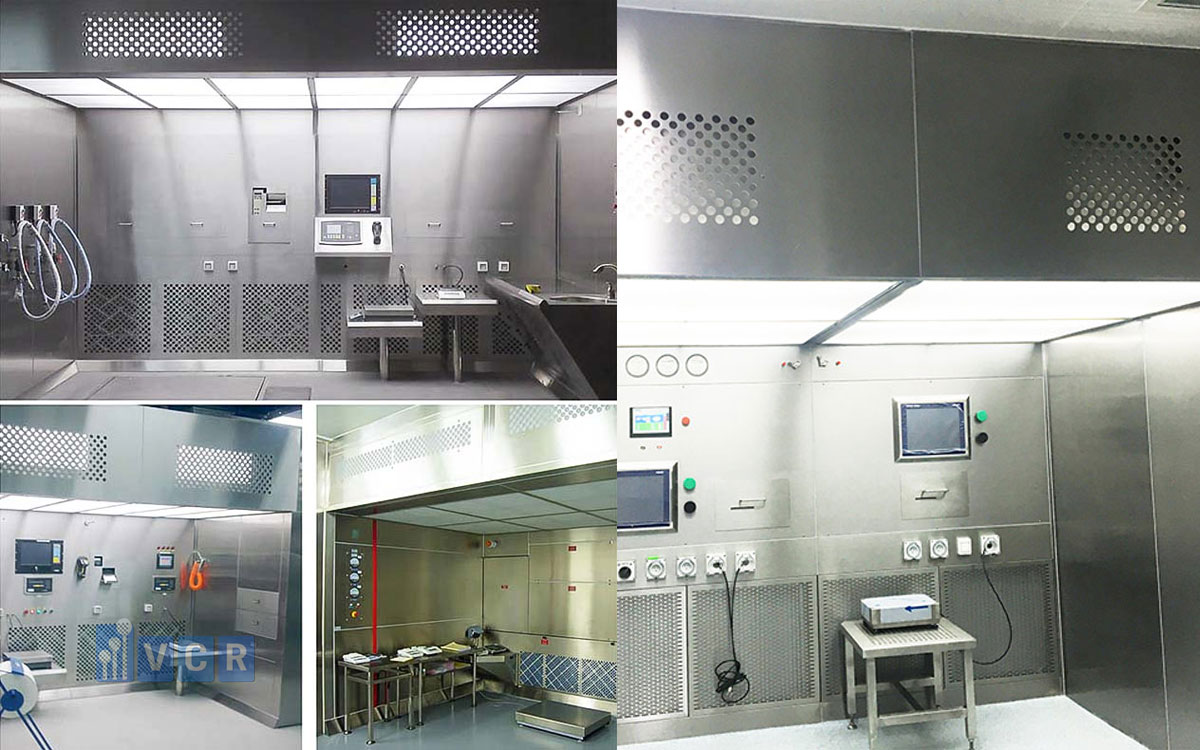
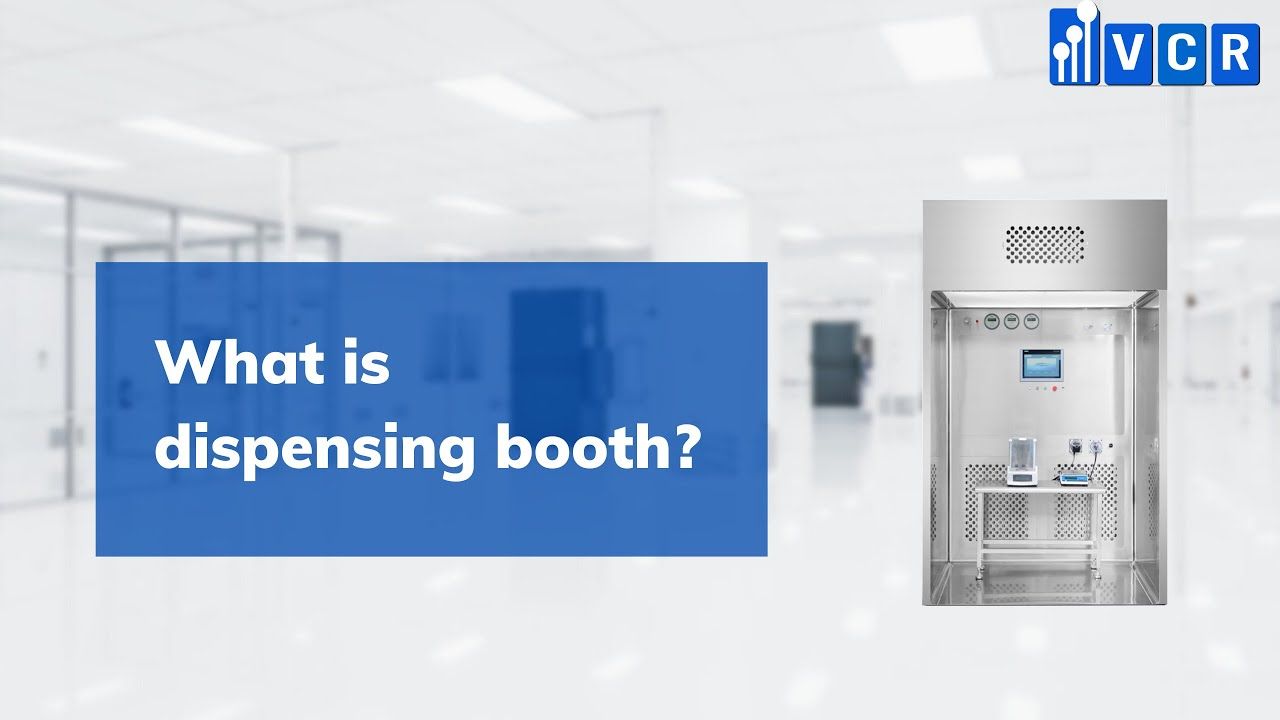
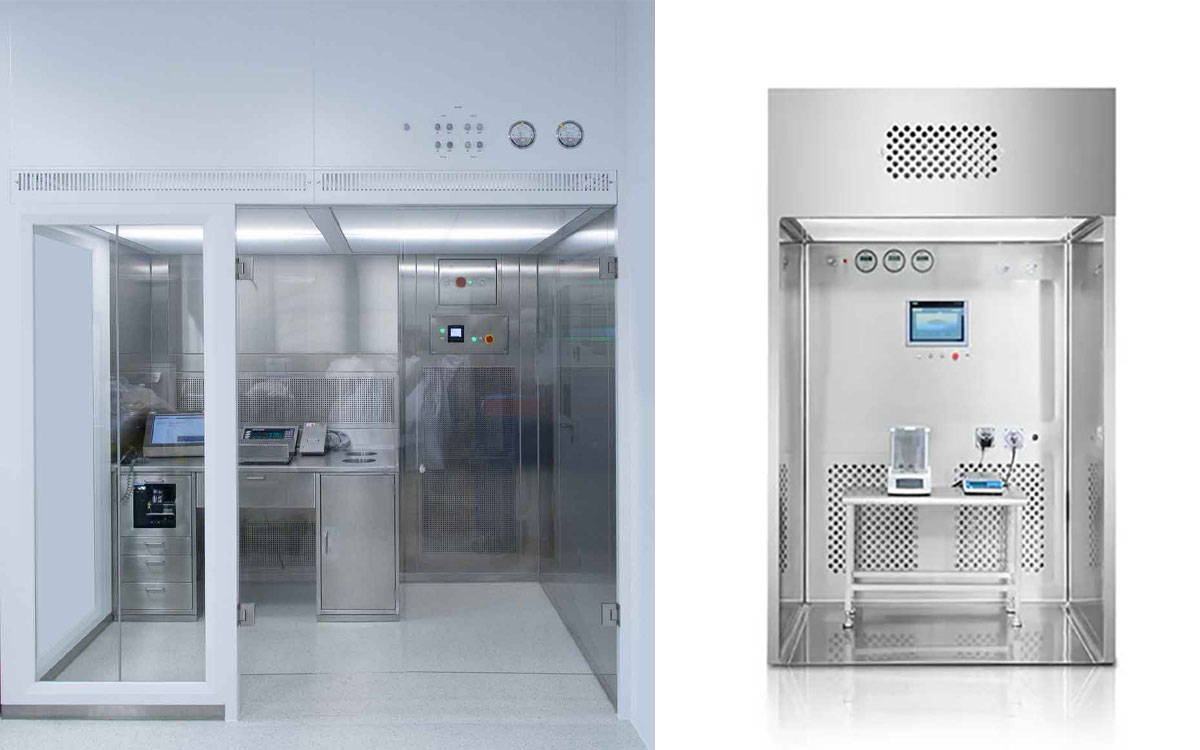
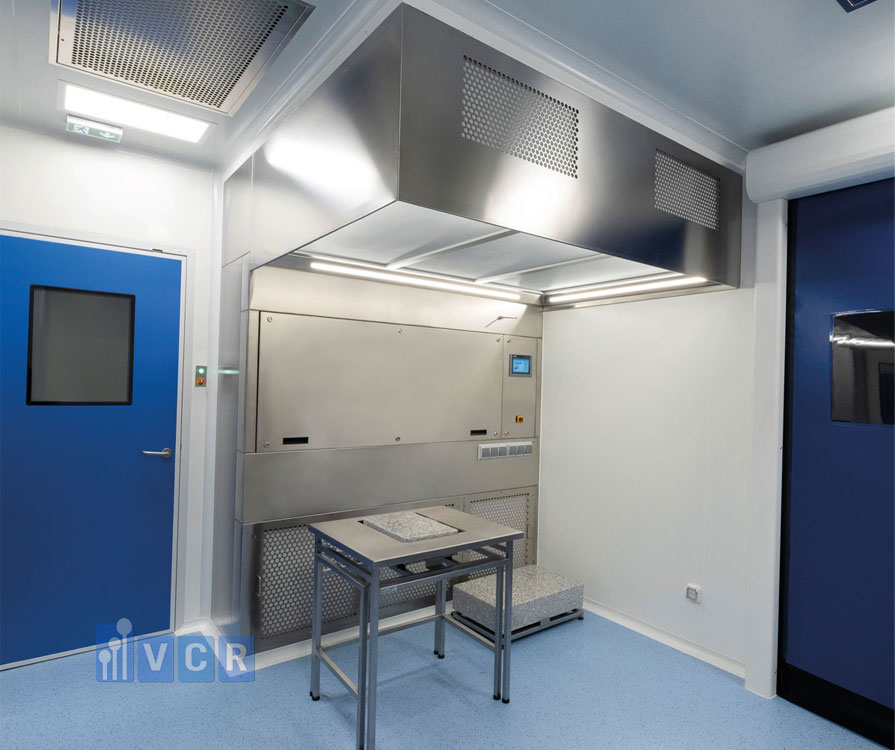
A Dispensing Booth is a controlled workstation used for weighing, dividing, dispensing and transferring powdered raw materials.
The equipment may also be called a Weighing Booth, Downflow Booth or Reverse Laminar Air Flow Booth - RLAF. The term Reverse Laminar Air Flow describes a controlled airflow arrangement in which clean air moves downward through the work zone while return air captures dust at a lower level.
The main purpose of a Dispensing Booth is to reduce the release of powder from the work zone, protect operators, minimize cross-contamination and maintain suitable cleanliness around exposed raw materials.
Dispensing activities normally require longer operating periods, larger material quantities and more movement than sampling operations.
A Sampling Booth is a controlled workstation or room used to collect samples from incoming raw materials. The operator opens a bag, drum or container, uses an appropriate sampling tool to collect a representative sample, reseals the original container and transfers the sample to the quality-control laboratory.
See product: Sampling Booth Class A
The quantity handled in a Sampling Booth is normally much smaller than the quantity handled in a Dispensing Booth. However, sampling can still release significant dust when the material is fine, lightweight, allergenic or highly active.
A Sampling Booth may also use downward airflow and filtered recirculation. Some models look similar to Dispensing Booths but are smaller, have lower dust-handling capacity and are qualified for a different operating process.
The equipment name should reflect its intended operation. A booth designed, risk-assessed and qualified for weighing is normally managed as a Dispensing Booth. A booth intended for incoming-material sampling is managed as a Sampling Booth.
Some facilities use one unit for both sampling and dispensing. This arrangement may be acceptable only when the equipment and facility design can support both processes without causing cross-contamination, material-status confusion or conflicts between warehouse and production workflows.
Direct Comparison Between a Dispensing Booth and a Sampling Booth
The main similarity is that both units create a controlled working zone for exposed raw materials. They may use HEPA filters, circulation fans, downward airflow, low-level return grilles, airflow sensors and differential pressure gauges.
The intended operations are different. A Sampling Booth is used to collect a representative quantity for laboratory analysis. A Dispensing Booth is used to weigh and issue material according to an approved manufacturing instruction.
During sampling, the operator generally opens one or more raw material containers, takes a relatively small sample, reseals the containers and sends the sample to the laboratory.
The containers are normally open for a limited period, and the quantity of disturbed material is relatively low.
During dispensing, operators may open several bags, transfer material onto a scale, divide it into multiple portions and place it into new containers. The operation can continue for a longer time and may create a higher dust load.
|
Comparison criterion |
Dispensing Booth | Sampling Booth |
| Primary purpose | Weighing, dividing and dispensing raw materials | Collecting samples for laboratory testing |
| Typical location | Weighing room or material-preparation area | Raw-material warehouse, receiving area or sampling room |
| Quantity handled | Medium to large | Small |
| Operating duration | Generally longer | Generally shorter |
| Dust generation | Can be high | Usually lower but material-dependent |
| Associated equipment | Scales, worktables, trolleys and dispensing containers | Sampling tools, sample containers and worktable |
| Main documentation | Manufacturing-order and dispensing records | Incoming-material sampling and laboratory records |
| Cleaning requirement | High, often between materials or batches | High, especially between different materials |
| Major error risk | Wrong material or incorrect dispensed quantity | Sample mix-up, identification error or unrepresentative sample |
| Qualification scope | Often broader due to process complexity | May be narrower but still requires formal qualification |
See our Dispensing Booth category here
- A Dispensing Booth usually requires a larger work area because it must accommodate scales, pallets, containers and operator movement.
- A Sampling Booth may be more compact where only one operator and one material container are handled at a time.
Product-protection objectives can also differ. In a Sampling Booth, the system should protect both the sample and the remaining material in the original container. In a Dispensing Booth, the system should protect the accurately weighed material before it enters the production process.
Both systems must protect the operator from dust exposure. A Dispensing Booth may require stronger containment because of the larger quantity handled and longer process duration.
Where materials are highly toxic, highly potent or subject to very low occupational exposure limits, a standard open booth may not provide sufficient protection. A closed containment system, safe-change filtration, dedicated exhaust or isolator may be required.
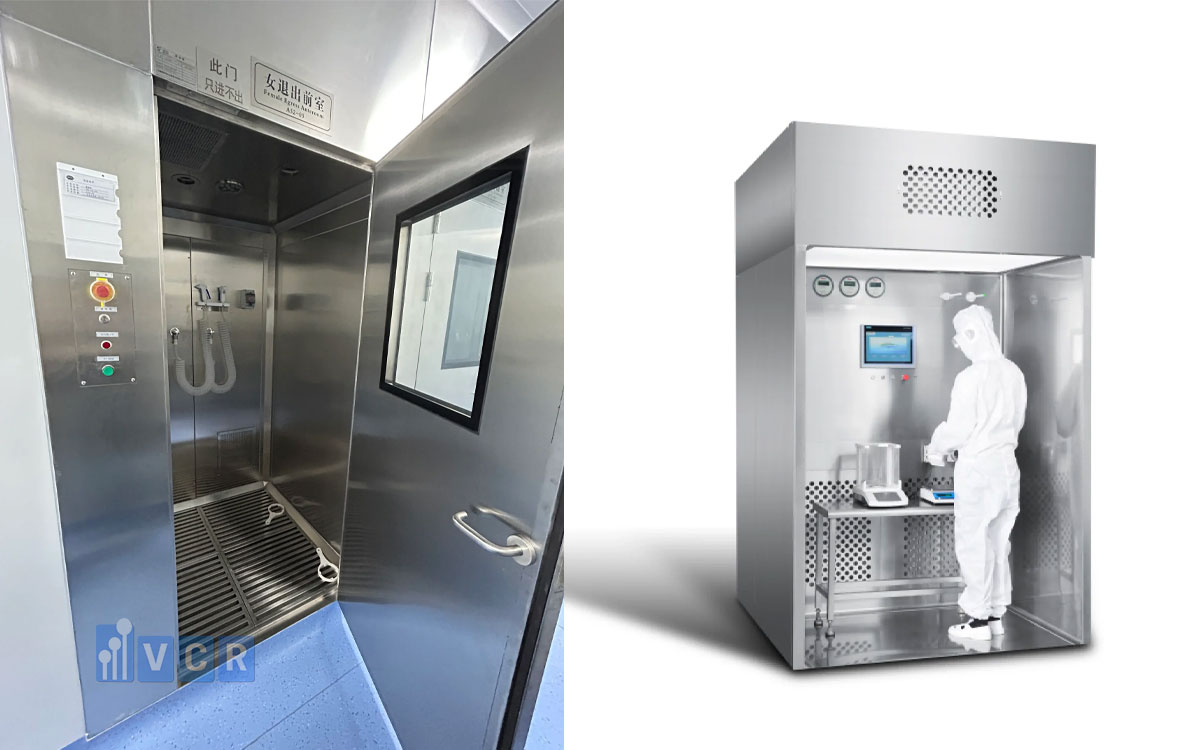
Differences in Process Flow and Material Movement
The sampling process normally begins when incoming material has been received but has not yet been released for manufacturing use.
Raw materials may remain under quarantine status. Sampling personnel verify the material identity, clean the external surface of the container, transfer it to the sampling area and collect the sample according to an approved procedure.
After sampling, the container is resealed, labeled or secured. The sample is transferred to the quality-control laboratory, while the remaining material stays under quarantine until testing is complete.
A Sampling Booth is therefore part of the incoming-material quality-control process. Its design should support accurate identification, prevent sample mix-ups, protect the remaining material and allow proper control of sampling tools.
Dispensing occurs after the material has been approved for manufacturing. Released materials are transferred from the warehouse to the weighing room, checked against the manufacturing order, weighed to the required quantity and placed in identified containers.
Operators may dispense several different materials during one shift. For this reason, sequence control, line clearance, cleaning and container identification are critical.
Line clearance is the documented confirmation that materials, labels, documents and residues from a previous operation have been removed before a new operation begins.
The material flow from a Dispensing Booth is connected directly to production. An incorrect weight, wrong material or cross-contaminated dispensing container can affect the entire production batch.
The difference in material status is important. A Sampling Booth normally handles quarantined or unreleased material, whereas a Dispensing Booth generally handles approved material intended for manufacturing.
This distinction is one reason the two operations should not automatically be combined in the same location.
Airflow Principles
Many Dispensing Booths and Sampling Booths use controlled downward airflow.
A fan draws air through filtration stages. The filtered air then passes through a HEPA filter and enters the work zone from above.
The downward airflow carries airborne powder toward low-level return grilles. Dust is captured by the filtration system before the air is recirculated or exhausted.
Reverse Laminar Air Flow is commonly used to describe an arrangement in which clean air moves downward while return air is collected below or behind the operator. This configuration helps reduce the movement of dust toward the operator’s breathing zone.
The booth normally maintains negative pressure relative to the surrounding room. Negative pressure encourages air to move from the room into the booth and reduces the likelihood that dust will escape through the open front.
Negative pressure must not be excessive. Excessive suction can disturb the airflow pattern, increase turbulence or draw contamination from the surrounding room toward exposed material.
The design therefore has to balance operator protection, environmental protection and product protection.
Part of the air may be recirculated to reduce energy consumption. A smaller portion may be exhausted to maintain negative pressure and remove accumulated contaminants.
The ratio of recirculated air to exhaust air depends on the material properties, risk assessment and facility requirements.
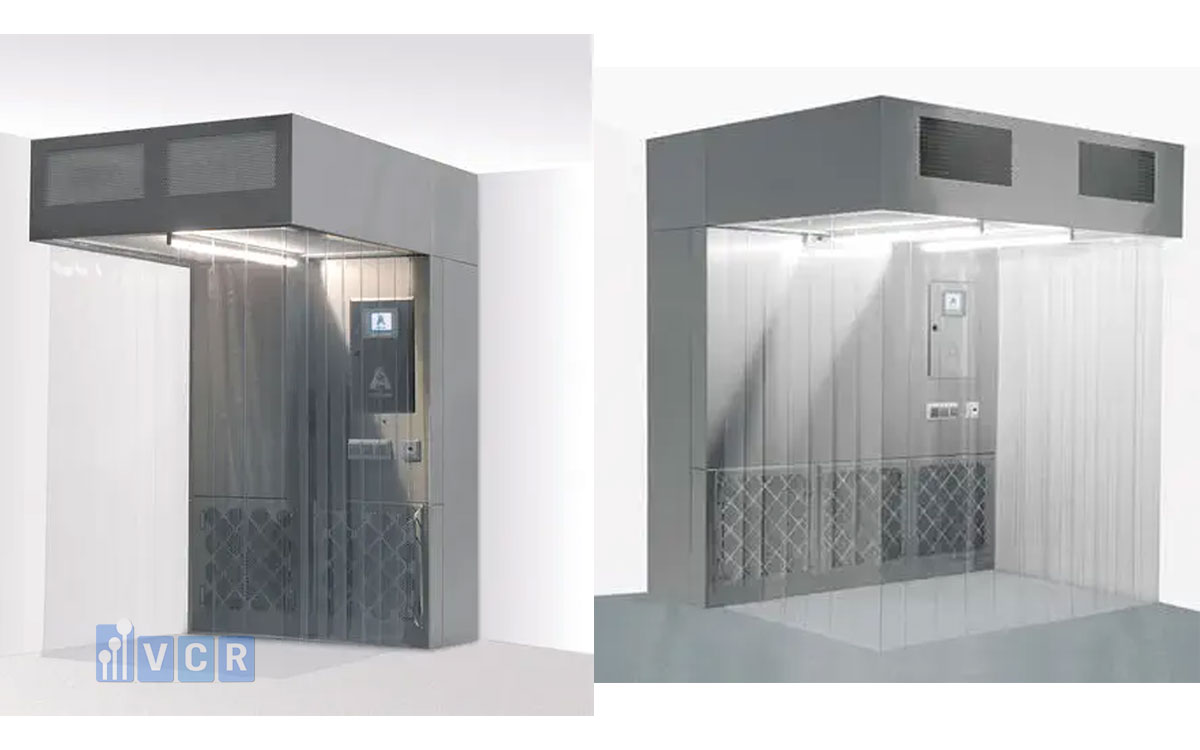
A larger Dispensing Booth may need higher airflow and greater dust-holding capacity because of its size and material load.
A Sampling Booth may use the same general principle but at a smaller scale.
Similar airflow principles do not make the equipment operationally identical. Intended use, dust load, internal layout, cleanability and qualification determine whether the booth is suitable for a particular process.
Construction and Main Components
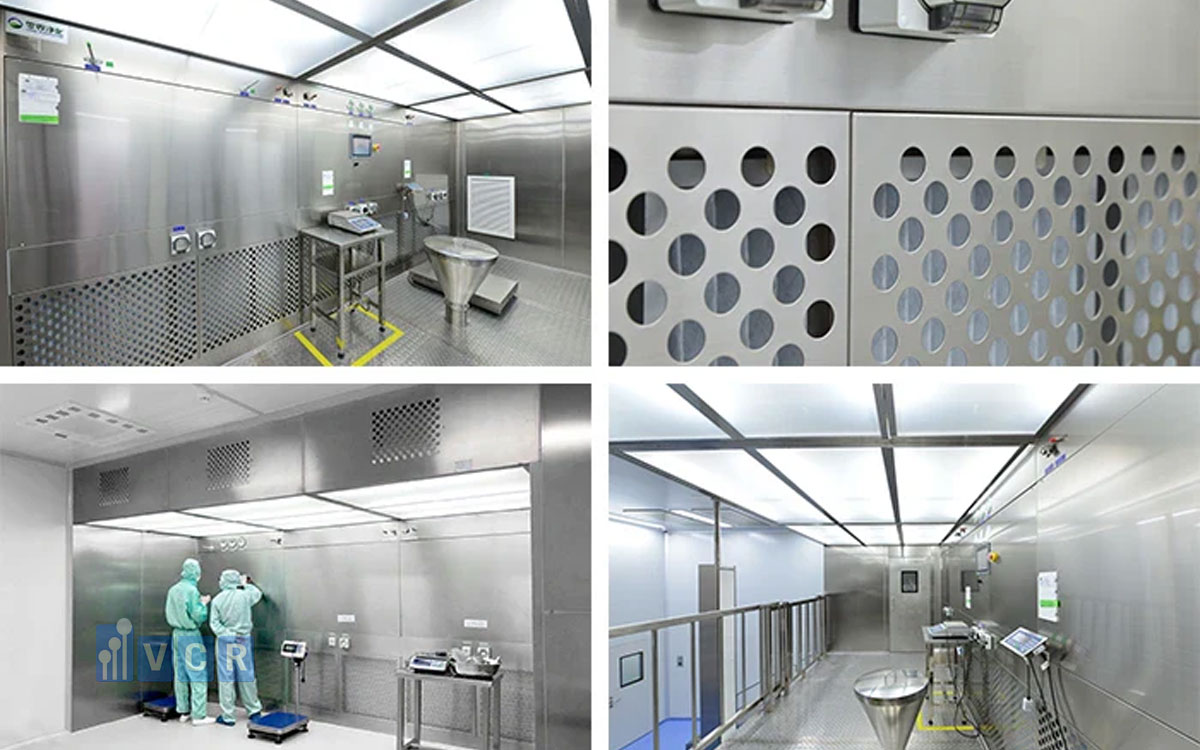
Dispensing Booths and Sampling Booths are normally constructed from stainless steel or another material suitable for the manufacturing environment.
Internal surfaces should be smooth, easy to clean and designed to minimize powder accumulation.
The filtration system may include a pre-filter, medium-efficiency filter and HEPA filter. The pre-filter captures larger particles. The medium filter reduces the load reaching the HEPA filter, while the HEPA filter supplies clean air to the controlled work zone.
The circulation fan generates the airflow and static pressure required by the system. A variable-frequency drive may be used to adjust fan speed, balance airflow and compensate for increasing filter resistance.
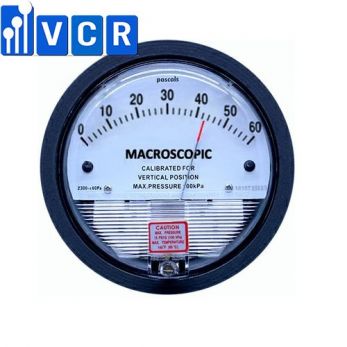
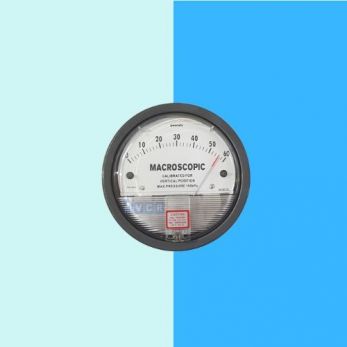
Differential pressure gauges or transmitters monitor pressure loss across each filter stage. When the pressure rises above a defined limit, the control system may generate an inspection or filter-replacement alarm.
An airflow velocity sensor may continuously monitor performance in the work zone. Some systems generate an alarm if the velocity falls below the approved operating limit.
A Programmable Logic Controller may manage the fan, variable-frequency drive, sensors and alarms.
A Human-Machine Interface displays operating status, airflow values, differential pressure and alarm history.
Lighting should provide sufficient illumination without creating excessive heat or disturbing the airflow.
Electrical sockets may be installed for scales, label printers or other supporting equipment.
- A Dispensing Booth normally has a more complex layout because it must accommodate scales, containers, pallets and trolleys.
- A Sampling Booth can be more compact, but it must still provide effective dust control, clean airflow and safe access for the operator.
Important Technical Parameters
The work-zone dimensions should be selected according to the number of operators, raw material container size, scales, tables, trolleys and dispensing containers.
An undersized work area may cause operators or equipment to block return-air grilles and interfere with airflow.
Air velocity must be high enough to move dust toward the return grilles without creating excessive turbulence or blowing powder away from the work surface.
The required velocity should be confirmed through airflow measurements, airflow uniformity testing and smoke visualization.
Average air velocity alone is not sufficient. A booth may achieve an acceptable average value while still containing low-velocity zones, turbulence or recirculation areas.
Airflow volume should be appropriate for the open-face area and anticipated dust load. Large Dispensing Booths normally require greater airflow than compact Sampling Booths.
The HEPA filter grade should be selected according to product-protection and cleanliness requirements. Filter selection should not be based only on the filter classification. The project should also consider individual test certification, installation method and the ability to perform on-site integrity testing.
Differential pressure across filters provides information about dust loading and filter resistance.
Alarm limits and response procedures should be established for increasing differential pressure.
Noise is an important occupational parameter. High fan speed, undersized return grilles or poorly designed ductwork can create unacceptable noise levels.
Illumination should be sufficient for label verification, material inspection, weighing and identification of residual powder.
Maintenance access is another important design parameter. Fans, filters, sensors and control panels should be accessible without major dismantling of the unit.
A lower purchase price may not represent lower life-cycle cost if the equipment is difficult to clean, maintain or qualify.
Practical Applications
Sampling Booths are normally installed in raw-material warehouses or dedicated sampling rooms. They support the collection of raw material samples before the material is approved for production.
In pharmaceutical facilities, samples may be tested for identity, assay, moisture, microbiological quality and other specifications. The sampling method should ensure that the sample is representative and that the remaining material is not contaminated.
Dispensing Booths are normally installed in weighing rooms, dispensing rooms or material-preparation areas. After weighing, materials are labeled and transferred to the production area.
- In dietary supplement manufacturing, Dispensing Booths can control dust generated from vitamins, minerals, herbal powders and excipients.
- In cosmetics manufacturing, the booth may be used for pigments, powdered active ingredients and functional additives.
- Chemical applications require additional assessment of toxicity, flammability, explosibility and corrosion.
Not every chemical is suitable for a standard recirculating booth. Hazardous powders may require dedicated exhaust, explosion protection or closed containment.
Sampling Booths are also used in food, chemical and industrial raw material facilities where controlled incoming sampling is required. Some factories install the Sampling Booth and Dispensing Booth in completely separate zones.
This helps maintain segregation between unreleased raw materials and materials that have been approved for manufacturing.
GMP and Relevant Standards
Good Manufacturing Practice requires sampling, weighing and dispensing activities to be performed according to controlled procedures that prevent mix-ups, contamination and cross-contamination. The booth is only one part of the contamination-control system.
Final performance also depends on the room layout, pressure cascade, cleaning procedures, protective clothing, personnel training, material identification and waste handling.
ISO 14644 provides a framework for air cleanliness classification and cleanroom testing. However, the decision to use a Dispensing Booth or Sampling Booth should not be based only on a particular ISO Class.
A documented quality risk assessment should determine the level of protection required. Factors may include toxicity, allergenic potential, particle size, dustiness, material quantity, operating duration and frequency.
Facility zoning should also reflect material status.
A sampling area may handle materials under quarantine, while a dispensing room normally handles released materials.
The booth exhaust rate and room HVAC design must be coordinated. Excessive air extraction from the booth can disturb the cleanroom pressure cascade.
Cleaning should be defined in a written procedure. The procedure should specify the cleaning method, cleaning tools, agents, frequency, inspection criteria and filter-maintenance requirements.
The equipment should also be calibrated, tested and qualified.
Records for airflow velocity, differential pressure, airborne particles and HEPA filter integrity should be controlled and traceable.
Which Equipment Should Be Selected?
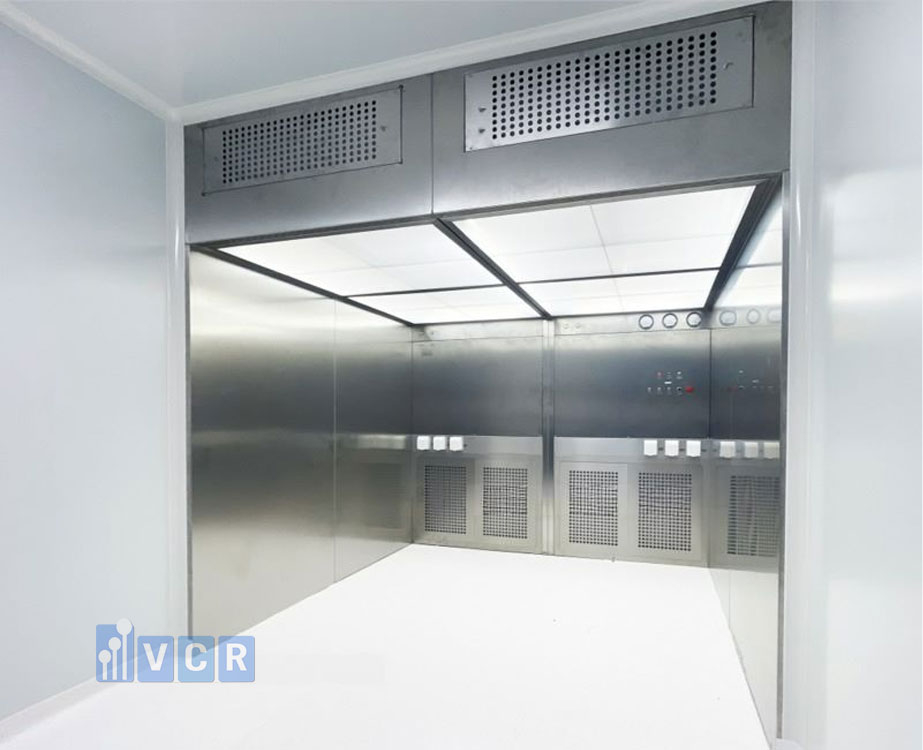
A Sampling Booth is normally the correct choice when the primary task is to collect a small representative sample for laboratory testing.
The equipment should be located close to the warehouse and integrated with quarantine, sampling and laboratory workflows.
A Dispensing Booth is more appropriate when the task involves weighing, dividing and issuing raw materials for manufacturing.
The booth should provide sufficient room for scales, dispensing containers and safe operator movement.
The quantity handled is an important consideration. Collecting a few grams or several hundred grams for testing is different from dispensing several kilograms for a batch.
Dust generation should also be assessed. Fine, lightweight and easily dispersed powders may require different airflow, return-grille geometry and filtration from heavy granular materials.
Material hazard characteristics may determine the required containment concept.
Highly potent materials may need a dedicated containment booth or closed system rather than a conventional open-front unit.
One booth may serve both sampling and dispensing where the design supports both processes and a formal risk assessment demonstrates acceptable control.
The facility must still manage cleaning, operating schedules, material status and documentation.
Shared use may be inappropriate where sampling involves unreleased material and dispensing involves released production material.
Combining the two flows may create unnecessary GMP complexity and cross-contamination risk.
Design, Installation Location and Layout
A Sampling Booth should support the material flow from goods receipt to quarantine and sampling. Unreleased materials should not be transported through areas used for approved production materials unless suitable controls are in place.
A Dispensing Booth should be positioned along the flow from the released-material warehouse to the manufacturing area. The layout should minimize transport distance and avoid crossing paths with waste or unrelated personnel.
Personnel, materials, samples, clean tools, used tools and waste should follow defined routes.
Doors and room air currents should not interfere with the booth airflow.
Maintenance clearance should be provided around fans, filters and electrical panels. If the booth is installed too close to a wall, filter replacement and fan maintenance may be difficult.
Return-air grilles must not be blocked by tables, scales, containers or operators.
Scale location should be reviewed to avoid vibration, airflow interference and measurement instability.
The electrical supply must be stable and properly protected.
Where an exhaust connection is used, duct resistance must be considered so that the designed airflow is maintained.
Heat generated by fans, lighting and operators affects the surrounding room. The HVAC system should be capable of compensating for the heat load and any air exhausted from the booth.
Smoke visualization should be performed with the actual working configuration, including operators, scales, tables and containers.
This confirms that the installed layout does not create unacceptable turbulence or obstruct the airflow.
Operation, Cleaning and Cross-Contamination Control
Before use, the operator should check the cleaning status, filter differential pressure, alarms, airflow and general equipment condition.
The booth should operate long enough for the airflow to stabilize before raw material containers are opened.
Tools and containers should be introduced according to an approved procedure. Dust-generating actions should remain inside the protected work zone. Operators should avoid blocking return-air grilles or working too close to the open edge.
After the operation, residual powder should be collected using an appropriate method. Compressed air should generally not be used to blow powder from surfaces because it can spread contamination throughout the booth and room.
Dispensing Booths often have a higher dust load, so their cleaning scope and duration can be greater. Scales, tables, floors, walls and return-air grilles require careful inspection.
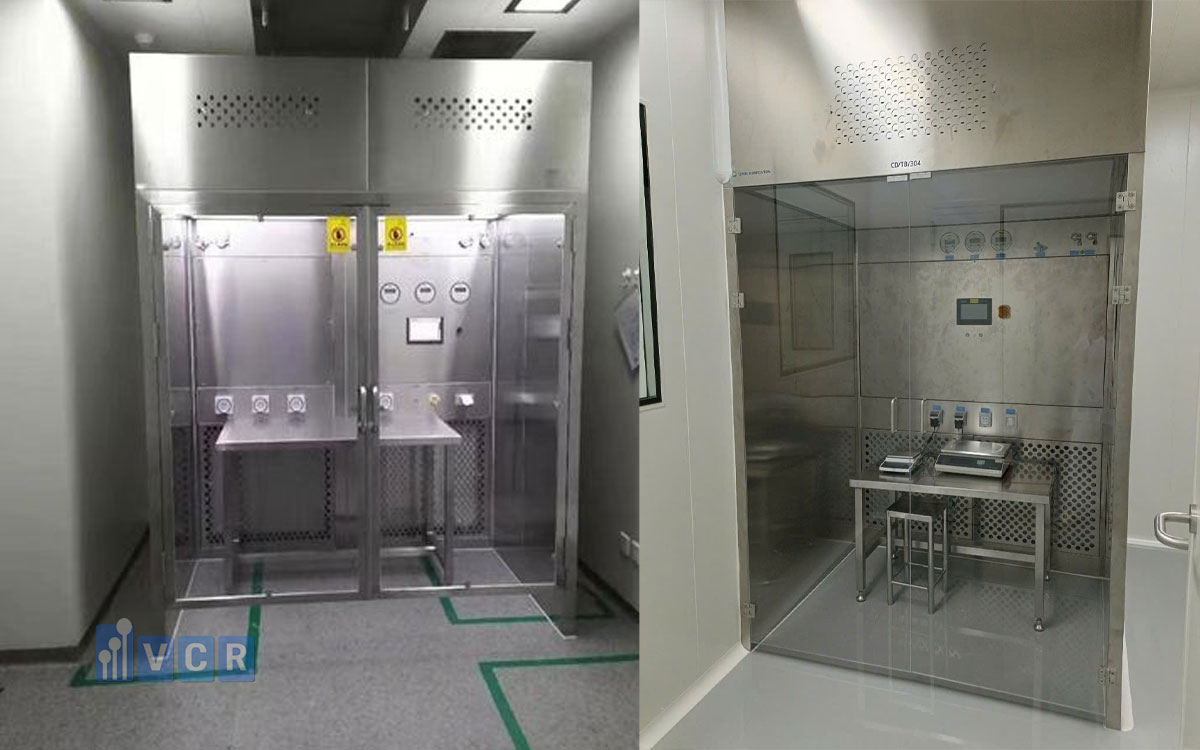
Sampling Booths should be cleaned between different raw materials to prevent sample contamination and incorrect laboratory results.
For high-risk materials, the manufacturer should define residue limits, cleaning methods and evidence demonstrating cleaning effectiveness.
IQ, OQ and PQ Qualification
Installation Qualification confirms that the booth has been installed according to approved drawings and specifications. IQ may verify the model, serial number, filters, fan, sensors, stainless-steel materials, electrical supply, installation location, drawings and calibration certificates.
Operational Qualification confirms that equipment functions operate correctly. OQ may include the fan, variable-frequency drive, lighting, alarms, sensors, Human-Machine Interface and emergency stop.
Performance Qualification confirms that the booth achieves the required performance under actual or simulated operating conditions. Typical PQ tests include airflow velocity, airflow uniformity, airborne particle concentration, HEPA filter integrity, pressure differential, noise, illumination and airflow visualization.
A Dispensing Booth may require a broader PQ scope because it has a larger work zone, more internal obstacles and several possible operating positions.
Smoke visualization should simulate the actual weighing and dispensing process. A Sampling Booth should be tested while simulating opening, sampling and resealing a raw material container.
The test should demonstrate that dust does not move toward the operator and that airflow does not contaminate the sample.
All testing instruments used for qualification should have valid calibration certificates. Acceptance criteria should be approved before testing begins.
After filter replacement, fan repair, airflow adjustment or equipment relocation, the company should assess whether partial or full requalification is required.
Read: IQ/OQ/PQ Qualification in Cleanroom Systems and GMP Equipment
Factors Affecting Equipment Price
The work-zone size is one of the main price factors. A Dispensing Booth is normally larger and therefore requires more stainless steel, higher airflow and a larger fan.
Construction material also affects cost. Stainless steel grade, sheet thickness, weld quality and surface finish can create significant price differences.
The number and grade of filters affect both purchase cost and replacement cost. A multi-stage filtration system may extend HEPA filter life but requires more space and components.
Airflow sensors, differential pressure transmitters, Programmable Logic Controllers, Human-Machine Interfaces, alarms and electronic data storage increase the price compared with basic mechanical gauges.
Technical documentation, Factory Acceptance Testing, IQ, OQ and PQ may be quoted separately.
The purchaser should clarify the required scope before signing the contract. Transportation, installation, balancing, operator training and warranty services should also be considered.
Large booths may need modular construction or partial disassembly to enter the installation area.
Under equivalent material and control requirements, a Dispensing Booth is normally more expensive than a Sampling Booth because of its larger size, higher airflow and more complex operation.
FAQ: Frequently Asked Questions
- Can a Dispensing Booth Be Used as a Sampling Booth?
It may be possible if the booth meets the sampling-process requirements, provides suitable airflow and has been formally risk-assessed. The facility must still control the separation between unreleased and released materials. Cleaning procedures, operating status and qualification documents should cover the shared use.
- Can a Sampling Booth Be Used for Weighing?
A Sampling Booth should only be used for weighing if its dimensions, dust capacity, airflow, scale location and qualification scope are suitable. A small booth may not provide sufficient space or containment for large dispensing operations. Any change in intended use should be assessed and approved.
- Are a Dispensing Booth and a Weighing Booth the Same?
The terms are frequently used for the same equipment category. “Weighing Booth” emphasizes weighing, while “Dispensing Booth” includes weighing, dividing and issuing material. The actual function should be determined from the design specification and approved operating procedure.
- Is a HEPA Filter Mandatory in a Sampling Booth?
The requirement depends on product protection, cleanliness and risk assessment. HEPA filtration is commonly used in pharmaceutical sampling booths to provide clean supply air and reduce contamination risk. The final configuration should reflect the process and applicable standard.
- Do Both Booths Require Negative Pressure?
Both types are commonly designed with negative pressure relative to the room to prevent dust escape. The pressure level should be coordinated with the room HVAC system. Excessive negative pressure may disturb airflow and affect cleanroom pressure control.
- What Air Velocity Is Appropriate?
There is no single value suitable for every booth. The required velocity depends on the open-face dimensions, dust load, material properties and return-air geometry. It should be confirmed by velocity measurements, uniformity testing and smoke visualization under realistic operating conditions.
- Can the Booth Protect Both Product and Operator?
A correctly designed booth can support both objectives. Clean downward airflow protects the exposed product, while negative pressure and low-level return grilles reduce operator exposure. Performance should be demonstrated through risk assessment and qualification testing.
- Is Periodic HEPA Filter Integrity Testing Required?
Yes. HEPA filters may be damaged during transportation, installation or operation. Integrity testing confirms that the filter media and installation seals do not contain unacceptable leaks. Testing frequency should be defined by the facility procedure and risk assessment.
- Are IQ, OQ and PQ Required?
Equipment that affects product quality, contamination control or operator safety should normally be qualified. The exact IQ, OQ and PQ scope depends on equipment criticality and the GMP requirements of the facility.
- Should a Sampling Booth Be Installed in a Warehouse or Cleanroom?
A Sampling Booth is commonly installed in a controlled sampling area associated with the warehouse. The correct location depends on material flow, cleanliness requirements, quarantine control and facility zoning. The entire process should be evaluated rather than relying only on the room name.
Dispensing Booth and Sampling Booth Consultation
The selection of a Dispensing Booth or Sampling Booth should be based on the intended process, raw material type, container size, handled quantity, dust-generation level, GMP requirements and available layout.
Project owners and cleanroom contractors should provide process descriptions, equipment layouts, raw material information, cleanliness classifications and qualification requirements before the final equipment configuration is selected.
Correct equipment selection at the early project stage reduces modification costs, improves cross-contamination control and simplifies Factory Acceptance Testing, Installation Qualification, Operational Qualification and Performance Qualification.
Vietnam Cleanroom Equipment supplies Dispensing Booths, Sampling Booths and other cleanroom equipment to cleanroom contractors and industrial projects. The company can support work-zone sizing, airflow design, HEPA filtration, sensors, control systems and technical documentation according to project requirements.
Hotline: 090.123.9008
Email: [email protected]
Website: vietnamcleanroom.com